Rolling TV Stand Buyer Guide: How to Choose a Mobile Display Solution for Flexible Spaces
/
Rolling TV Stand Buyer Guide: How to Choose a Mobile Display Solution for Flexible Spaces
Share Box
A rolling TV stand is becoming an essential display solution for offices, classrooms, training centers, hotels, exhibitions, retail areas, and multi-purpose commercial spaces. Unlike a fixed wall installation, a rolling TV stand gives users the freedom to move a screen from one room to another, adjust viewing height, reposition the display for different audiences, and avoid drilling into walls.
For B2B buyers, this product category is especially valuable because it meets several market needs at the same time: flexible space usage, easier installation, display mobility, compatibility with different TV sizes, and customization potential for distributors or private-label brands.
However, not every mobile TV stand is suitable for professional use. Buyers need to look beyond the basic appearance and evaluate the frame structure, wheel quality, VESA compatibility, height adjustment, load-bearing design, cable management, shelf options, packaging, and OEM/ODM support.
This guide explains how to choose the right rolling TV stand from a practical sourcing and project-use perspective. If you are looking for a ready product reference, Xinge Mount offers a Mobile TV Stand with Wheels designed for flexible TV placement, stable support, height adjustment, VESA compatibility, and commercial display applications.
Why Rolling TV Stands Are Becoming More Popular
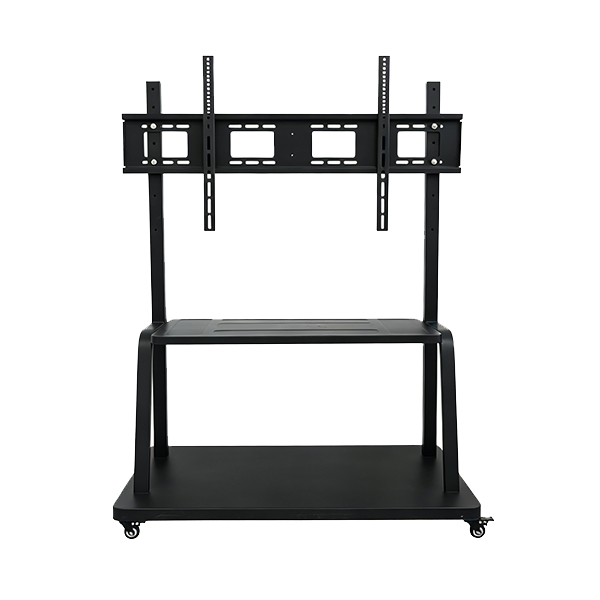
Modern spaces are no longer designed for one fixed screen position. Offices need displays for meetings, video calls, presentations, and training. Schools may move screens between classrooms, laboratories, and activity rooms. Hotels and apartments need flexible display options for meeting areas, lounges, or temporary events. Retailers and exhibition organizers need screens that can be moved, repositioned, and reused.
A rolling TV stand solves these problems because it does not depend on a permanent wall-mounted location. It can turn a display into a movable communication tool.
For buyers, this creates strong product value:
- It reduces installation restrictions.
- It works in rented spaces where wall drilling may not be allowed.
- It supports temporary layouts and multi-purpose rooms.
- It can be used across many commercial scenarios.
- It is easier to install than many wall-mounted structures.
- It can be customized for different markets and product lines.
A well-designed rolling TV stand is not just a stand with wheels. It is a flexible display mounting system that helps users adapt screens to changing spaces.
Rolling TV Stand vs Mobile TV Stand vs TV Cart
The terms rolling TV stand, mobile TV stand, and TV cart are often used in similar ways, but buyers should understand the small differences in how customers search and compare these products.
A rolling TV stand usually emphasizes movement and wheel-based positioning. A mobile TV stand often sounds more professional and is commonly used in commercial or office settings. A TV cart may suggest a more equipment-focused product, especially when the stand includes shelves for laptops, media players, cameras, or conferencing devices.
| Search Term | Common Meaning | Typical Use Scenario | Buyer Focus |
|---|---|---|---|
| Rolling TV stand | TV stand with wheels for movable display use | Offices, classrooms, homes, events | Smooth movement, stability, easy setup |
| Mobile TV stand | Professional movable TV mounting solution | Meeting rooms, schools, hotels, training rooms | Structure, compatibility, commercial use |
| TV cart | Mobile display stand with accessory shelf | AV equipment, conference systems, education | Shelf design, cable routing, device support |
| TV stand with wheels | Consumer-friendly search term | Home, office, temporary display | Mobility, convenience, simple installation |
For SEO and product planning, rolling TV stand and mobile TV stand should both be used naturally. They target similar users but may capture different search behavior.
Where a Rolling TV Stand Works Best
A rolling TV stand is valuable because it can serve many spaces without permanent installation. This makes it useful for both end users and B2B buyers who need one product type to cover several customer groups.
Offices and meeting rooms
In offices, screens are often used for presentations, online meetings, training, team reviews, and data dashboards. A rolling TV stand allows one display to be moved between meeting rooms instead of installing multiple fixed screens.
For buyers serving office furniture, AV equipment, or business supply channels, this is a strong selling point. The product supports flexible workspaces and reduces dependence on fixed wall layouts.
Classrooms and training centers
In education and training spaces, room layouts change often. A mobile display can be moved closer to students, turned toward different seating areas, or shared between rooms. This is useful for schools, tutoring centers, corporate training rooms, and laboratories.
The stand should have a stable base, smooth wheels, reliable locking casters, and a height range suitable for different audiences.
Hotels and conference spaces
Hotels often need display solutions for meeting rooms, banquet halls, lounges, and temporary event spaces. A rolling TV stand helps staff move screens according to event requirements. Compared with permanent wall mounting, it offers more layout freedom.
For hotel project buyers, the key concerns are appearance, stability, ease of movement, packaging consistency, and after-sales reliability.
Exhibitions and retail displays
Trade shows, showrooms, and retail spaces need screens that can be repositioned quickly. A rolling TV stand can support product videos, digital signage, demonstrations, or temporary promotional displays.
In these scenarios, the product must look clean, move smoothly, and remain stable in busy environments.
Homes and apartments
Some users do not want to drill walls or cannot install a wall bracket due to rental restrictions. A rolling TV stand gives them a flexible alternative. It can also be used in bedrooms, living rooms, gyms, or small apartments where screen position changes frequently.
For consumer-facing sales channels, easy assembly and clear packaging are especially important.
Key Features Buyers Should Evaluate
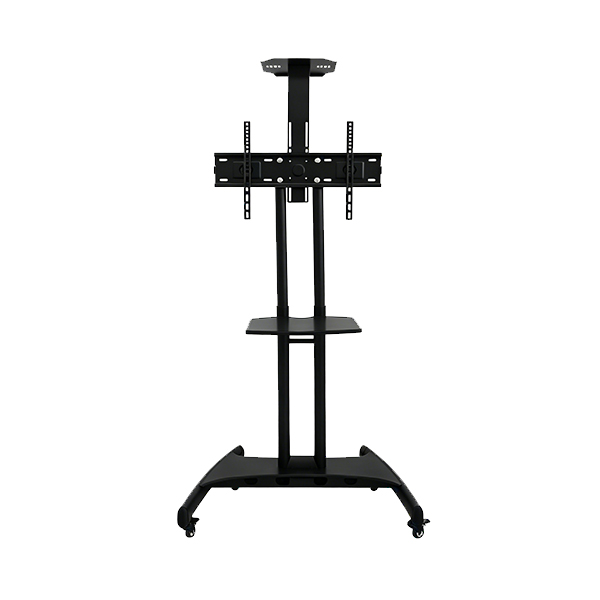
A rolling TV stand must do more than hold a screen. It needs to stay stable, move smoothly, fit different TVs, and remain easy to assemble.
VESA compatibility
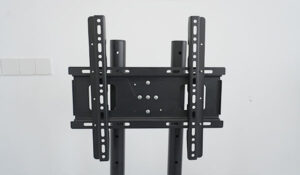
VESA compatibility determines whether the TV can be attached to the stand properly. Buyers should check the supported mounting patterns and make sure they match mainstream TV sizes in the target market. The VESA mounting standard is an important reference for understanding display mounting interfaces.
A wider VESA range can make the product easier to sell, but it must be supported by a strong mounting plate and frame design.
Load capacity
The stand must support the intended TV weight safely. For commercial use, buyers should avoid choosing products based only on appearance. The frame, column, base, screws, mounting plate, and wheel structure all affect real stability.
Height adjustment
Height adjustment makes the stand useful in more environments. A meeting room may require a higher screen position, while a classroom or small office may need a lower viewing angle. The adjustment mechanism should be easy to operate and stable after locking.
Locking wheels
A TV stand with wheels should move easily but also stay firmly in place when needed. Locking casters help prevent unwanted movement during presentations, meetings, or public use.
Cable management
A clean cable route improves appearance and reduces clutter. This matters especially in offices, hotels, classrooms, and retail spaces where the display area needs to look professional.
Accessory shelf
Some rolling TV stands include shelves for laptops, cameras, media players, set-top boxes, speakers, or conferencing devices. For AV and education buyers, this can increase product value.
Structure and Stability: The Real Test of Quality
Many rolling TV stands look similar in product photos, but the difference becomes clear during assembly and daily use. A stable stand should feel balanced when the TV is mounted, moved, turned, or locked in place.
Buyers should pay attention to several structural details:
- Base width and shape
- Steel tube thickness
- Column reinforcement
- Mounting plate strength
- Screw quality
- Wheel connection points
- Anti-loosening design
- Surface coating consistency
- Overall center of gravity
The base is especially important. A narrow or lightweight base may look compact, but it can reduce stability when supporting larger displays. For commercial environments, a reinforced frame is usually more reliable.
The U.S. Consumer Product Safety Commission’s Anchor It safety education highlights the importance of using proper furniture and TV support to help reduce tip-over risks. For mobile TV stands, this means buyers should choose products designed for the intended TV size and use them according to the manufacturer’s installation instructions.
How Viewing Comfort Affects Product Selection
A rolling TV stand is not only about mobility. It also affects how comfortably people view the screen.
In meeting rooms, the screen should be visible to participants without requiring awkward neck movement. In classrooms, students should be able to see the display clearly from different positions. In training rooms, the display may need to move closer to the audience or shift between presentation zones.
The OSHA monitor guidance provides useful ergonomic principles for screen viewing distance and posture. While a TV stand is not the same as a desk monitor setup, the same basic idea applies: display position should support comfortable viewing rather than force users into poor posture.
When sourcing rolling TV stands, buyers should consider:
- Whether height adjustment is smooth and secure
- Whether the screen can be positioned at a comfortable viewing level
- Whether the stand can be moved without shaking the display
- Whether cables remain organized after movement
- Whether the base fits the room layout without blocking walking paths
A product that supports better viewing comfort can be more attractive for offices, classrooms, hotels, and training spaces.
Rolling TV Stand vs Wall Mount: Which One Should Buyers Recommend?
A rolling TV stand and a wall mount solve different problems. Buyers should not treat them as direct replacements in every situation.
A wall mount is better when the TV should stay in one fixed location and the user wants a clean wall-mounted appearance. A rolling TV stand is better when flexibility, mobility, or non-permanent installation matters.
| Need | Better Choice | Reason |
| Permanent living room installation | TV wall mount | Cleaner and more integrated appearance |
| Meeting room mobility | Rolling TV stand | Can move between rooms and layouts |
| Rental apartment setup | Rolling TV stand | No wall drilling required in many cases |
| Hotel room fixed display | Fixed or tilting wall mount | Stable and space-saving |
| Training room flexibility | Rolling TV stand | Easy to reposition for different audiences |
| Large commercial display project | Depends on layout | May require both mobile and wall-mounted solutions |
For buyers building a complete product catalog, rolling stands and wall mounts should work together. Xinge Mount’s TV Mounts & Brackets category can support fixed, tilting, swivel, full motion, and mobile display needs, helping buyers cover more installation scenarios.
B2B Sourcing Checklist for Rolling TV Stands
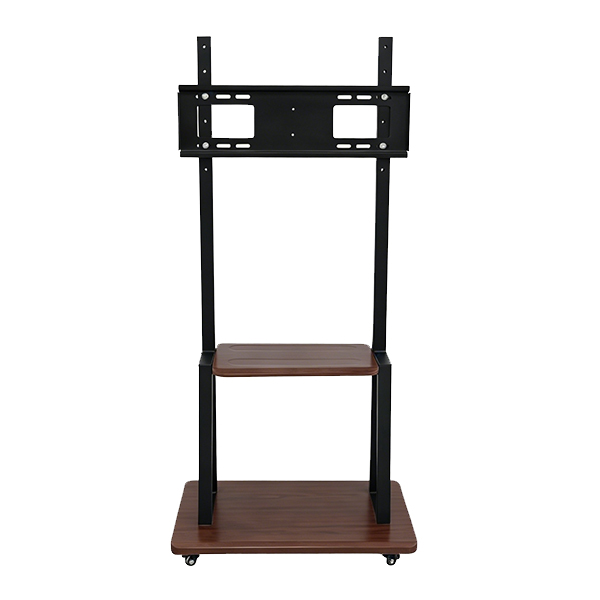
A B2B buyer should evaluate a rolling TV stand from both product and business perspectives. A model that works for one small order may not be ideal for long-term distribution or project supply.
Use this checklist before placing a bulk order:
| Checklist Item | What to Confirm | Why It Matters |
| TV size range | Supported screen sizes and weight | Prevents mismatch and returns |
| VESA pattern | Supported mounting hole patterns | Improves compatibility with mainstream TVs |
| Frame material | Steel structure and reinforcement | Affects long-term stability |
| Base design | Width, shape, and balance | Reduces shaking and improves safety |
| Wheel quality | Smooth rolling and locking function | Improves user experience |
| Height adjustment | Range and locking stability | Supports different rooms and audiences |
| Shelf design | Laptop or device support | Adds value for AV and education use |
| Packaging | Carton strength and accessory protection | Reduces shipping damage |
| Manual | Clear assembly steps and warnings | Lowers installation complaints |
| Customization | Logo, color, carton, manual, structure | Supports private-label markets |
This type of checklist helps buyers avoid selecting products based only on photos. It also makes supplier communication more efficient.
OEM and ODM Customization Opportunities
For distributors, private-label brands, importers, and project suppliers, customization can create a stronger market position. A rolling TV stand can be adjusted in many ways depending on the target customer group.
Common OEM/ODM customization options include:
- Logo printing or labeling
- Carton design
- Instruction manual customization
- Accessory kit configuration
- Surface color options
- Shelf size or placement adjustment
- Base structure adjustment
- Height range modification
- VESA plate design
- Mixed sourcing with TV wall mounts or monitor arms
Xinge Mount supports OEM/ODM solutions for mobile TV stands, TV wall mounts, monitor stands, and monitor arms. Buyers can review the company’s Application page to understand how different display mounting solutions fit living rooms, bedrooms, conference rooms, classrooms, exhibition halls, and other commercial spaces.
For buyers who need a broader display product line, related options such as Full Motion TV Wall Mount Bracket and Monitor Stands & Arms can be combined with rolling TV stands for a more complete sourcing strategy.
Common Mistakes When Choosing a Rolling TV Stand
Choosing the wrong rolling TV stand can lead to installation problems, poor user experience, and after-sales complaints. Here are common mistakes buyers should avoid.
Only checking TV size
TV size alone is not enough. Buyers must also check weight capacity, VESA pattern, mounting plate design, and frame strength.
Ignoring the base structure
The base determines much of the stand’s stability. A weak base can create shaking or tipping concerns, especially with larger screens.
Choosing wheels without locks
A mobile stand must move smoothly, but it also needs to stay fixed when in use. Locking wheels are important for offices, classrooms, exhibitions, and public environments.
Overlooking packaging
Rolling TV stands include multiple metal parts and accessories. Weak packaging can cause scratches, missing screws, bent parts, or damaged cartons during shipment.
Not considering the end-use environment
A classroom, hotel, office, event venue, and apartment may require different product details. Buyers should match the stand to the real use case instead of choosing one model for every market blindly.
How to Prepare a Better Inquiry
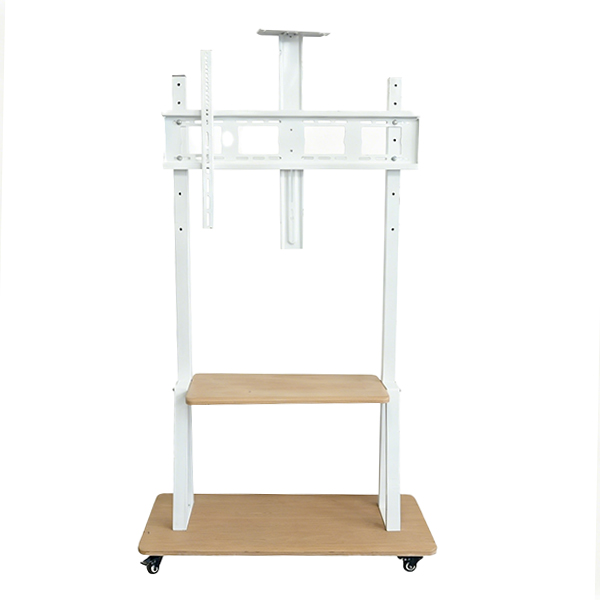
A clear inquiry helps the supplier recommend a more suitable rolling TV stand and respond more accurately. Before contacting a supplier, buyers should prepare the following information:
- Target TV size range
- Required VESA patterns
- Expected load capacity
- Application scenario
- Whether a shelf is needed
- Height adjustment expectations
- Target market or sales channel
- Packaging requirements
- Logo or private-label needs
- Estimated order quantity or project plan
For product selection and customization support, buyers can contact Xinge Mount through the Contact Us page and share project details for a more accurate recommendation.
FAQ
What is a rolling TV stand?
A rolling TV stand is a mobile display support structure with wheels. It allows users to move a TV between rooms or positions without permanent wall mounting. It is commonly used in offices, classrooms, hotels, exhibitions, and flexible commercial spaces.
Is a rolling TV stand the same as a mobile TV stand?
In many cases, yes. Both terms describe a movable TV support solution. “Rolling TV stand” often emphasizes wheels and movement, while “mobile TV stand” may sound more professional for office, education, and commercial use.
What should buyers check before choosing a rolling TV stand?
Buyers should check TV size compatibility, VESA pattern, load capacity, frame structure, base stability, wheel quality, height adjustment, shelf design, packaging, and instruction manual clarity.
Is a rolling TV stand suitable for commercial projects?
Yes. A well-designed rolling TV stand can be suitable for meeting rooms, classrooms, hotels, exhibitions, training spaces, and retail displays. For commercial use, stability, packaging, and consistent quality are especially important.
Can rolling TV stands be customized for private-label brands?
Yes. Many B2B buyers request logo, carton, manual, color, accessory kit, shelf, and structure customization. OEM/ODM support helps distributors and brand owners build a more market-specific product line.
Conclusion
A rolling TV stand is a practical display solution for modern flexible spaces. It helps users move screens easily, adjust viewing positions, avoid permanent wall installation, and support different room layouts. For offices, classrooms, hotels, exhibitions, apartments, and commercial projects, this flexibility can be more valuable than a fixed installation.
For B2B buyers, the best rolling TV stand is not simply the model that looks good in photos. It should offer strong structure, reliable wheels, VESA compatibility, stable height adjustment, clean cable management, clear packaging, and customization options for different markets.
If you are sourcing rolling TV stands for distribution, private-label sales, or project supply, review Xinge Mount’s Mobile TV Stand with Wheels or explore more display mounting options through the Products page. For OEM/ODM requirements, packaging customization, or project recommendations, send your inquiry through the Contact Us page.