Mobile TV Stand Buying Guide for B2B Projects
/
Mobile TV Stand Buying Guide for B2B Projects
Share Box
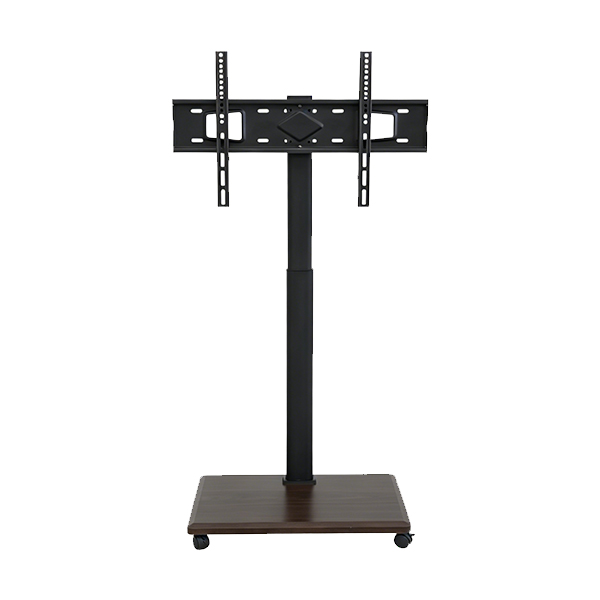
For hotels, schools, offices, rental spaces, showrooms, and AV integrators, a mobile TV stand is often more practical than a fixed wall installation. It gives teams the freedom to move a display between rooms, adjust viewing height, protect wall finishes, and support temporary presentation setups without rebuilding the space around every screen.
For B2B buyers, however, choosing the right mobile TV stand is not only about screen size. A bulk order needs to match real installation conditions, packaging requirements, end-user safety expectations, and long-term service needs. This guide explains how importers, distributors, project buyers, and private label brands can evaluate a mobile TV stand before confirming samples or placing larger orders.
Start With the Application, Not the Screen Size
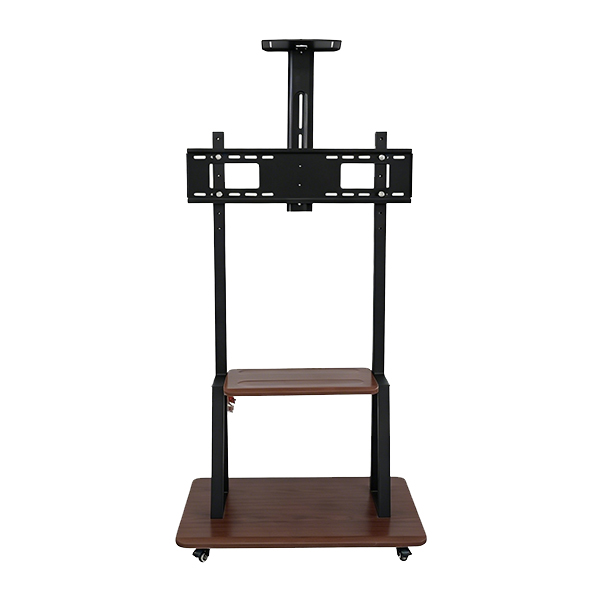
The first question is where the mobile TV stand will be used. A classroom, hotel conference room, medical training room, trade show booth, and warehouse control area may all use similar displays, but they place different demands on the mobile TV stand. A school may need easy movement and stable locking wheels. A hotel may care more about clean appearance and cable management. A rental company may need a stand that can be assembled repeatedly without damaging hardware.
Before comparing samples, write down the expected screen range, room type, floor surface, movement frequency, and whether the stand will carry accessories such as a camera, media player, soundbar, or shelf. This prevents a common sourcing mistake: choosing a mobile TV stand that looks suitable in a catalog but feels unstable, too light, or inconvenient in daily use.
Check VESA Compatibility Carefully
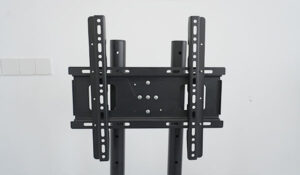
VESA compatibility is one of the most important details in display mounting. The Flat Display Mounting Interface defines common mounting hole patterns used by many televisions and monitors. A mobile TV stand should clearly state the VESA range it supports, and buyers should compare that range with the screens used in the target market.
For B2B orders, do not check only the maximum size shown in the product title. Two screens with the same diagonal size can have different VESA patterns and different weights. A good mobile TV stand specification should make it easy to confirm both the screen size range and the mounting pattern range. If your customers sell into multiple regions, ask whether the mounting plate supports the common VESA sizes used by your product segment.
Compare Load Capacity With a Safety Margin
Load capacity should be treated as an engineering requirement, not a marketing line. The selected mobile TV stand should support the display weight with a comfortable safety margin, especially when the stand will be moved often or used in public spaces. Buyers should also consider the combined weight of shelves, cameras, mini PCs, signage players, or other accessories.
In commercial environments, the stand may be handled by different staff members over time. Uneven floors, quick repositioning, and occasional bumps can all add stress. This is why a stronger frame, a stable base, and reliable fasteners matter. When comparing suppliers, ask how the stand is tested, how the rated load is defined, and whether the structure is designed for static display only or frequent movement.
| Buying point | What to confirm | Why it matters |
|---|---|---|
| Screen fit | TV size range, VESA pattern, display weight | Prevents mismatch during installation |
| Mobility | Wheel size, brake design, floor surface suitability | Improves stability and daily handling |
| Structure | Steel thickness, base design, fastener quality | Supports safer long-term use |
| Accessories | Shelf, camera tray, cable routing, hardware kit | Reduces project installation problems |
| Packaging | Carton strength, foam protection, labeling | Helps reduce shipping damage and after-sales issues |
Evaluate Wheels, Brakes, and Base Stability
The wheels are a small part of the product, but they strongly affect user experience. A mobile TV stand for a meeting room may move only a few meters each week, while a stand used by an AV rental company may be moved many times a day. Wheel diameter, material, rotation smoothness, and brake reliability all deserve attention during sample review.
For public or shared spaces, lockable casters are usually essential. Buyers should check whether the brakes are easy to operate and whether the mobile TV stand remains stable when locked. Base width also matters. A narrow base may look cleaner, but a wider base may provide better balance for larger displays. The right choice depends on the application, so a mobile TV stand should be evaluated in the room conditions where it will actually be used.
Look at Height Adjustment and Viewing Ergonomics
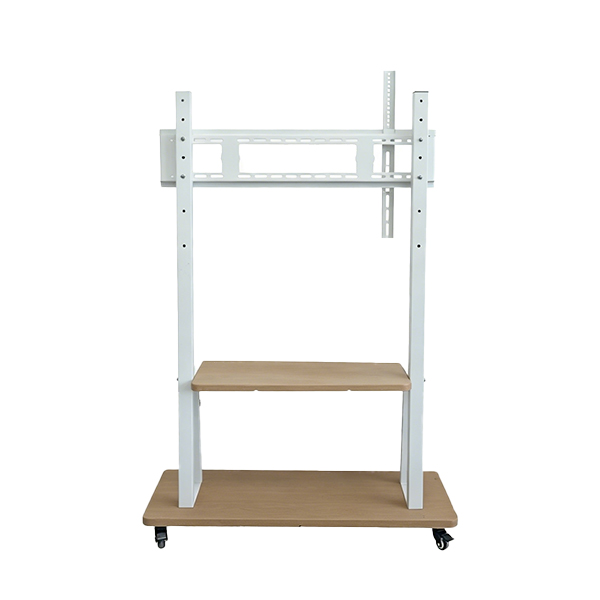
Height adjustment is not only a convenience feature. It affects visibility, comfort, and accessibility for different users. In a training room, the display may need to be high enough for the back row to see. In a video conference room, the screen and camera position should feel natural for seated participants. In an exhibition space, the screen may need to align with a product demo area.
General ergonomic principles, such as reducing awkward viewing angles, are also relevant to display placement. The OSHA computer workstation guidance discusses viewing comfort in workplace settings, while ergonomics more broadly focuses on fitting tools and environments to human use. For buyers serving offices and schools, a mobile TV stand with practical height adjustment can support better room layouts and a better end-user experience.
Do Not Ignore Cable Management
A display setup that looks clean in product photos can become messy after HDMI cables, power cords, camera cables, and media devices are added. For commercial projects, cable management affects both appearance and maintenance. A mobile TV stand with cable clips, internal routing, or rear channels can make the finished installation look more professional.
This point is especially important for buyers selling to hotels, conference rooms, and education projects. Clean cable routing reduces visual clutter and helps staff move the stand without pulling cables loose. When reviewing samples, install a real display and accessories rather than judging the frame alone. This gives a more accurate view of how the mobile TV stand will perform after delivery.
Match the Stand With Related Mounting Products
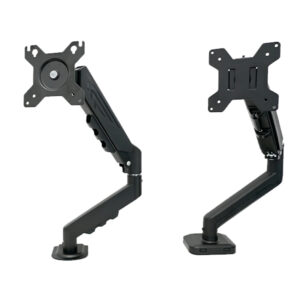
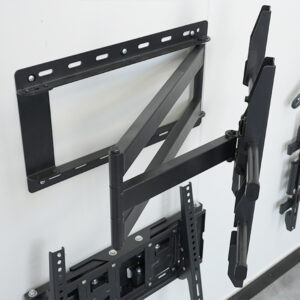
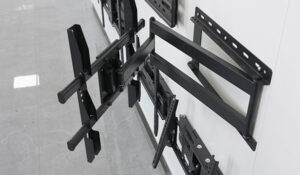
A mobile TV stand is often part of a wider mounting product line. Importers and distributors may also need TV mounts and brackets for wall installations, full motion TV wall mount brackets for flexible rooms, and adjustable monitor arms for desks and workstations. Building a complete display mounting range can help customers choose the right solution for different spaces.
For example, a hotel may use fixed or tilting wall mounts in guest rooms, full motion mounts in suites or meeting areas, and a mobile TV stand in conference rooms. A school may combine wall-mounted displays in classrooms with movable stands for shared labs, lecture rooms, or events. Thinking in product systems helps B2B buyers plan inventory more effectively.
Ask the Right Supplier Questions Before Bulk Orders
Before placing a bulk order, buyers should ask practical questions that reveal whether the supplier understands real B2B requirements. These questions do not need to be complicated, but they should go beyond product appearance.
- What TV size, VESA range, and load capacity does this mobile TV stand support?
- Can the packaging be adjusted for export shipping and private label requirements?
- Are assembly instructions, hardware kits, and carton labels customizable?
- Can accessories such as shelves, camera trays, or cable management parts be added?
- How are materials, welding, surface coating, and final assembly checked before shipment?
These questions help buyers compare suppliers on execution, not only on product photos. Xinge Tech supports display mounting products for global B2B customers, including standard models and OEM/ODM requirements. Buyers can learn more about the company on the About Us page or discuss project needs through the Contact Us page.
Review Packaging for Export and Project Delivery
Packaging is easy to overlook until after a shipment arrives with damaged cartons, missing accessories, or unclear installation hardware. A mobile TV stand usually includes several metal parts, wheels, screws, brackets, and sometimes shelves. If the packaging is not well organized, the end user may struggle during assembly even if the product itself is well designed.
For export orders, ask how each component is protected inside the carton. Check whether small hardware is separated clearly, whether the instruction manual matches the final configuration, and whether carton marks can support warehouse identification. For private label buyers, packaging is also part of the customer experience. A well-packed mobile TV stand reduces confusion, supports brand presentation, and helps protect the product during international logistics.
Consider Standards, Safety, and End-User Responsibility
Display mounting products should always be selected and installed with safety in mind. Buyers can refer to general safety resources such as the U.S. Consumer Product Safety Commission tip-over information for awareness of furniture and display stability risks. For product documentation and international trade, buyers may also need to consider quality management expectations such as ISO 9001 quality management principles, depending on their market and customer requirements.
This does not mean every project has the same compliance path. Requirements can vary by region, customer, and installation type. The practical takeaway is simple: choose a mobile TV stand based on documented specifications, suitable use conditions, correct assembly, and a supplier that can communicate clearly about materials, structure, and packaging.
When a Mobile TV Stand Is the Better Choice
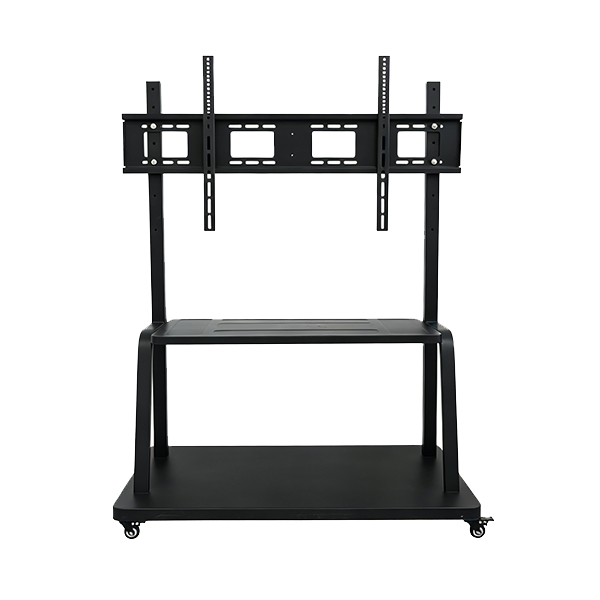
A wall mount is still the best solution for many permanent installations. A fixed TV wall mount can create a clean, space-saving display area, while a swivel or full motion bracket can improve viewing angles. But a mobile TV stand is often the better choice when the display needs to move, when walls cannot be drilled, when the room layout changes often, or when one screen must serve several spaces.
For distributors and project buyers, this creates a clear sales opportunity. Instead of treating a mobile TV stand as a single accessory, position it as a flexible display solution for spaces where wall mounting is not ideal. This makes the product easier to explain to hotels, schools, offices, AV installers, event companies, and facility managers.
Final Checklist for B2B Buyers
Before confirming a sample or order, review the complete use case: screen size, VESA pattern, display weight, movement frequency, floor surface, accessories, packaging, and assembly experience. A suitable mobile TV stand should feel stable when loaded, move smoothly when needed, lock securely in place, and arrive with clear hardware and instructions. For B2B buyers, the best mobile TV stand is the one that fits both the display and the way the customer will actually use the room.
If your business is sourcing TV mounting products for wholesale, private label, or project supply, Xinge Tech can help you compare product options and build a practical display mounting range. Explore the full product range or contact the team to discuss a mobile TV stand configuration for your market.