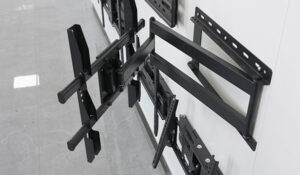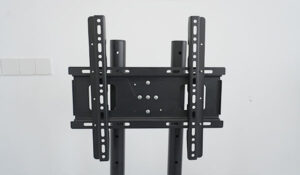
Corner TV Mount Ideas: How to Save Space Without Sacrificing Viewing Comfort
/
Corner TV Mount Ideas: How to Save Space Without Sacrificing Viewing Comfort
Share Box
Introduction
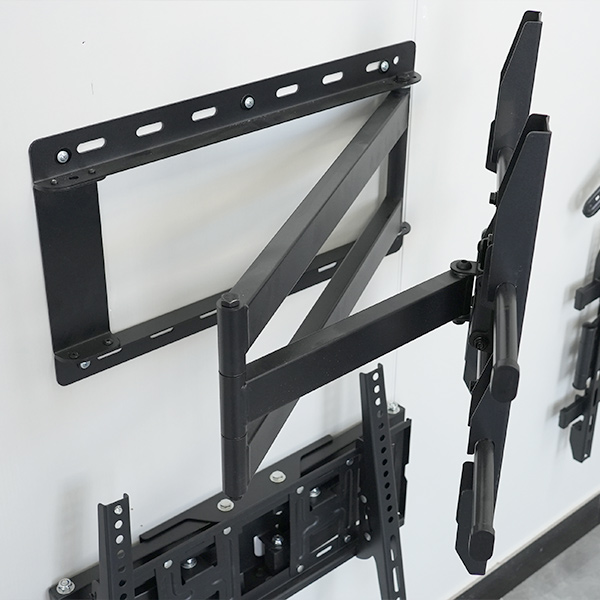
A corner tv mount is one of the most practical solutions for rooms where a traditional flat-wall TV installation does not work well. In apartments, bedrooms, hotel rooms, offices, classrooms, lounges, and small commercial spaces, the best viewing position is not always directly in the center of a wall. Sometimes the corner is the only area that keeps the room open, avoids blocking furniture, and creates a better screen angle.
Compared with a standard fixed bracket, a corner TV wall mount usually needs more flexibility. The TV may need to extend from the wall, swivel toward the seating area, and stay stable even when the arm is adjusted. This makes product structure, VESA compatibility, arm length, wall plate design, and installation safety especially important.
For B2B distributors, project suppliers, and private-label brands, corner TV mounting is a valuable topic because it connects directly with real user problems: limited wall space, awkward room layouts, small apartments, hotel furniture arrangements, and multi-angle viewing. Xinge Mount provides a complete range of TV Mounts & Brackets for different installation needs, including flexible solutions such as Swivel TV Wall Mount, Full Motion TV Wall Mount Bracket, and Retractable TV Wall Mount.
Why Corner TV Mounts Are Useful in Modern Spaces
Modern rooms are often designed around flexibility. People want cleaner walls, more open floor areas, better furniture placement, and fewer bulky cabinets. A corner tv mount helps solve these layout problems by using space that is often underused.
In a small living room, mounting the TV in a corner may free up the main wall for a sofa, storage cabinet, window, or decorative panel. In a hotel room, a corner-mounted TV can serve both the bed area and the desk area. In an office, a corner display can support meetings without taking over the entire wall. In a classroom or training room, a corner installation may help more people view the screen from different seating positions.
The main advantage is not only space saving. A good corner TV mount can also improve viewing flexibility. When the mount allows swivel or extension, users can adjust the screen toward the main seating area instead of forcing the room layout to fit the TV.
What Makes a Corner TV Mount Different from a Standard Wall Mount
A standard wall mount usually assumes the TV will be installed flat against a single wall. A corner tv mount must handle a more complicated viewing situation. The TV often needs to sit at an angle, extend away from the wall, and rotate enough to face the audience.
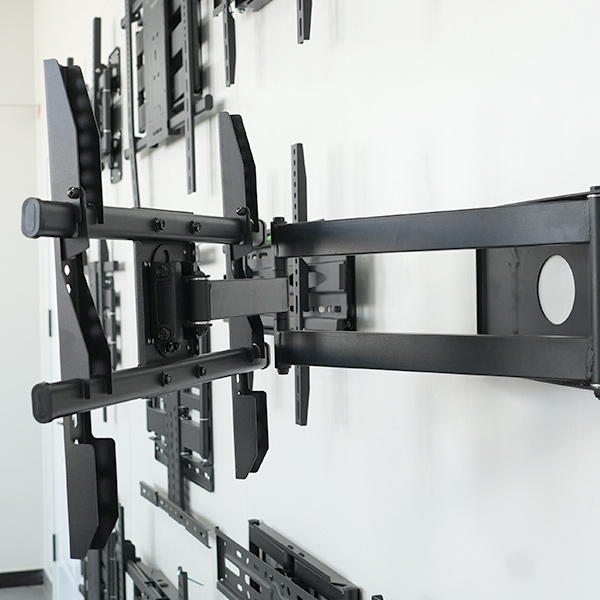
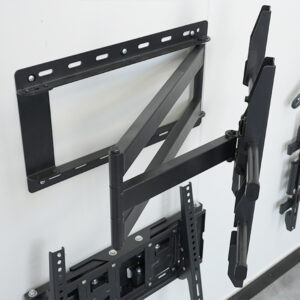
This is why many corner installations use a full motion or articulating structure. The mount should allow the TV to move outward and swivel smoothly. A basic fixed bracket may not provide enough angle adjustment for a true corner setup.
The most important difference is leverage. When the TV is extended away from the wall, the force on the bracket increases. This means the wall plate, arm structure, screw connections, and mounting surface must be strong enough for the intended TV size and weight. Buyers should not judge a corner TV wall mount only by its movement range. Stability after extension is just as important.
Best Rooms and Applications for a Corner TV Mount
A corner tv mount can be used in many spaces, but it is especially valuable when the room layout is not ideal for a centered wall installation.
Small apartments
Small apartments often have limited wall space. A corner installation can keep the TV out of the main walking path while still creating a comfortable viewing angle. This is useful when the room combines living, dining, and work areas.
Bedrooms
Bedrooms may have wardrobes, windows, doors, or limited wall width. A corner TV wall mount allows the screen to be positioned toward the bed without occupying a full wall. A swivel function can also help adjust the angle for different viewing positions.
Hotel rooms
Hotel rooms need clean design, practical viewing angles, and durable installation. A corner-mounted TV can make the room feel more open while allowing guests to watch from the bed, desk, or sitting area. For hotel projects, bracket stability and consistent installation accessories are especially important.
Offices and meeting rooms
Offices may use corner displays for video meetings, dashboards, presentations, or shared information. A flexible mount allows the screen to face different groups of people depending on meeting layout.
Classrooms and training rooms
In classrooms or training rooms, screens may need to be visible from different seating areas. A corner mount with swivel adjustment can improve visibility without requiring a large central wall.
Retail and commercial displays
Retail spaces often use screens for product videos, menus, promotions, or instructions. A corner-mounted screen can use unused space while keeping the display visible to customers from different directions.
Corner TV Mount vs Full Motion TV Mount
A corner tv mount and a full motion TV mount are closely related, but they are not always the same thing. A corner mount describes the installation scenario, while a full motion mount describes the movement function.
A full motion TV mount can often work well in a corner because it allows the TV to extend, swivel, and adjust. However, not every full motion mount is ideal for corner installation. The arm length, wall clearance, TV width, and swivel range must support the actual room layout.
| Feature | Corner TV Mount Need | Why It Matters |
|---|---|---|
| Extension distance | Usually important | Helps pull the TV away from the corner |
| Swivel range | Very important | Allows the screen to face the seating area |
| Wall plate strength | Very important | Supports the TV when extended |
| VESA compatibility | Essential | Ensures the TV fits the bracket |
| Load capacity | Essential | Reduces installation risk |
| Cable management | Helpful | Keeps the corner area clean |
| Level adjustment | Helpful | Improves final screen alignment |
For many buyers, the best solution is a strong Full Motion TV Wall Mount Bracket or Swivel TV Wall Mount that can support angled viewing and stable extension.
VESA Compatibility for Corner TV Installations
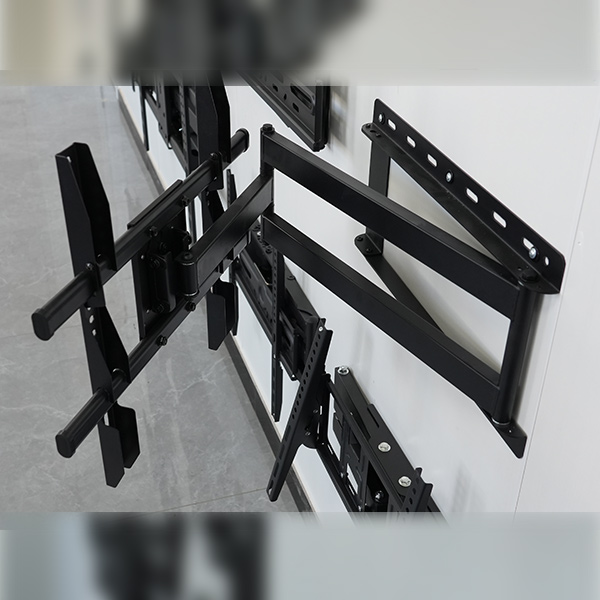
VESA compatibility is one of the first specifications buyers should check. VESA mounting patterns determine whether the bracket can connect properly to the back of the TV. The VESA Mounting Standard is widely used for flat-panel displays and helps manufacturers and buyers match TVs with suitable mounts.
For corner TV installations, VESA compatibility is important because the bracket may be used with different TV sizes across different rooms or projects. A wider VESA range can improve product flexibility, but it must be supported by a strong mounting plate and reliable hardware.
Before selecting a corner tv mount, check:
- Supported TV size range
- Supported VESA patterns
- Maximum load capacity
- Mounting plate structure
- Screw kit configuration
- TV back clearance
- Whether the TV can rotate without hitting the wall
- Whether cables have enough room after adjustment
A corner installation can become difficult if the TV is too wide for the available space or if the mount cannot extend far enough. Buyers should think about both the bracket and the room together.
Arm Length and Swivel Range: Two Details That Decide the Result
The performance of a corner tv mount depends heavily on arm length and swivel range. A mount may look suitable in product photos, but if the arm is too short, the TV may not clear the corner properly. If the swivel range is too limited, the screen may not face the seating area comfortably.
Arm length affects how far the TV can move away from the wall. Longer extension can be useful for corner setups, but it also increases leverage on the wall plate and arms. This means the structure must be strong enough to remain stable when extended.
Swivel range affects how far the TV can rotate left or right. For a corner installation, users usually need more horizontal adjustment than they would need for a flat wall. However, the actual usable angle also depends on TV width, wall clearance, cable position, and installation height.
A good product selection process should answer these questions:
- How wide is the TV?
- How deep is the corner space?
- Where will viewers sit?
- How far must the TV extend to clear the wall?
- Does the mount remain stable when fully extended?
- Can the cables move safely with the bracket?
- Can the user adjust the TV without excessive force?
These details are especially important for hotels, apartments, classrooms, offices, and other spaces where the TV may be adjusted frequently.
Wall Type and Installation Safety
A corner TV mount must be installed on a suitable wall structure. The best bracket cannot perform safely if it is installed on an unsuitable surface or with incorrect hardware.
The U.S. Consumer Product Safety Commission’s Anchor It safety campaign highlights the importance of properly securing TVs and furniture to reduce tip-over risks. While wall-mounted TVs are different from furniture-mounted TVs, the same principle applies: the display must be supported correctly and installed according to instructions.
For corner TV mounting, buyers should pay attention to:
- Wall material
- Stud position or solid wall structure
- Screw and anchor selection
- Wall plate size
- Installation instructions
- Load capacity
- TV weight
- Adjustment frequency
- Cable routing
- Final stability after installation
For B2B projects, installation documentation matters. Clear manuals, labeled hardware packs, and warning information can reduce mistakes and improve customer satisfaction.
Viewing Height and Viewing Comfort
A corner tv mount should not only save space. It should also create a comfortable viewing experience. If the TV is too high, too low, too far to one side, or angled poorly, users may experience discomfort during long viewing sessions.
The OSHA monitor positioning guidance provides useful principles for display placement, including keeping screens positioned to support comfortable head and neck posture. Although TVs and workstation monitors are not exactly the same, the basic viewing comfort principle is still useful: the display should support natural viewing rather than force awkward posture.
When planning a corner TV setup, consider:
- Seating height
- Viewing distance
- Main viewing direction
- Glare from windows or lights
- TV center height
- Screen tilt
- Swivel angle
- Cable visibility
- Walking path clearance
A corner installation should make the room more comfortable, not simply move the TV into unused space.
Cable Management in Corner TV Setups
Cable management is often more difficult in a corner than on a flat wall. Cables may need to follow the arm movement, pass behind furniture, or connect to multiple devices. If cable routing is ignored, the final installation can look messy and may restrict the movement of the bracket.
A good corner TV mount setup should leave enough space for:
- Power cable routing
- Signal cable movement
- Streaming device or media player connection
- Cable clips or ties
- Safe bending radius
- Future maintenance access
For hotels, offices, classrooms, and retail spaces, cable management is not just about appearance. It also affects safety, cleaning, and maintenance. A clean corner display looks more professional and reduces the risk of cables being pulled or damaged.
Corner TV Mount Selection Checklist
Use this practical checklist when evaluating a corner tv mount for product sourcing or project installation.
| Selection Point | What to Check | Why It Matters |
| TV size range | Compatible screen sizes | Prevents mismatch with target TVs |
| Weight capacity | Maximum supported load | Supports safe installation |
| VESA pattern | Supported hole patterns | Ensures bracket compatibility |
| Arm extension | Distance from wall | Helps the TV clear the corner |
| Swivel range | Left-right adjustment | Improves viewing angle |
| Wall plate | Width and reinforcement | Affects stability when extended |
| Installation hardware | Screws, washers, anchors | Reduces installation problems |
| Cable management | Space and routing support | Keeps setup clean and functional |
| Surface finish | Coating quality | Improves appearance and durability |
| Packaging | Protection and accessory organization | Reduces shipping damage |
| Manual | Clear installation guidance | Lowers after-sales questions |
| Customization | Logo, carton, manual, structure | Supports market-specific product lines |
This checklist is useful for distributors, project buyers, and product managers who need to evaluate more than one model.
Common Mistakes When Choosing a Corner TV Mount
A corner TV setup can fail if the mount is selected only by TV size or general appearance. Here are common mistakes to avoid.
Choosing a mount with too little extension
If the arm cannot extend far enough, the TV may hit the wall or fail to face the seating area correctly. Corner setups usually need more extension than standard flat-wall installations.
Ignoring TV width
A large TV may require more clearance when rotating. Even if the mount supports the TV size, the room corner may not have enough space for smooth adjustment.
Overlooking wall structure
A corner may look convenient, but the wall must still support the bracket properly. Wall structure and hardware selection are critical.
Using a mount with weak arm stability
When a TV is extended away from the wall, weak arms may shake or sag. Buyers should check the structure, load capacity, and wall plate design.
Forgetting cable movement
Cables must move safely when the TV is pulled out or swiveled. Tight cables can limit adjustment or create maintenance problems.
Treating all rooms the same
A hotel room, bedroom, apartment, office, and classroom may need different viewing angles and installation heights. A flexible product range is more useful than one single model for every space.
OEM and ODM Opportunities for Corner TV Mount Products
For B2B buyers, a corner tv mount topic can support broader product planning. Many buyers do not need a product labeled only as a “corner mount.” They may need a full motion or swivel TV wall mount that works well in corner applications.
OEM/ODM customization can help adapt the product to different markets:
- Logo customization
- Carton design
- Instruction manual design
- Screw kit configuration
- Wall plate design adjustment
- Arm length or structure adjustment
- Surface color customization
- VESA plate customization
- Packaging layout
- Product label and barcode support
Xinge Mount supports display mounting solutions for homes, offices, classrooms, hotels, exhibitions, and commercial spaces. The Application page provides a broader view of how different TV mounts and monitor brackets fit real installation environments.
For buyers who want to build a complete product line, corner installation content can also connect with Fixed TV Wall Mount, Tilting TV Wall Mount, and Full Motion TV Wall Mount Bracket products. This helps cover more room layouts and customer needs.
How to Prepare a More Accurate Inquiry
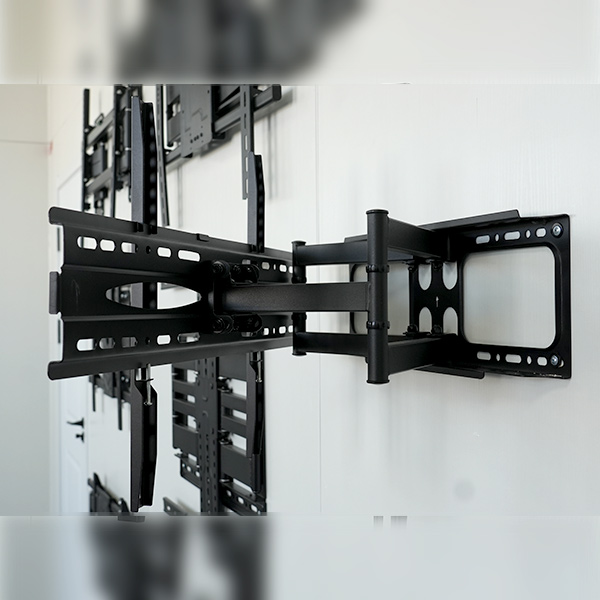
A clear inquiry helps the supplier recommend a better corner tv mount solution. Instead of only asking for a general TV bracket, buyers should provide useful project details.
Before contacting a supplier, prepare:
- Target TV size range
- TV weight range
- Required VESA patterns
- Room type or application scenario
- Corner wall condition
- Desired extension distance
- Required swivel direction
- Packaging requirements
- Logo or private-label needs
- Quantity plan
- Target market
- Manual or accessory requirements
For product selection, customization, and project recommendations, buyers can contact Xinge Mount through the Contact Us page.
FAQ
What is a corner tv mount?
A corner tv mount is a TV mounting solution used when the TV needs to be installed near or inside a room corner. It usually requires swivel or full motion adjustment so the screen can face the viewing area comfortably.
Can a full motion TV mount be used as a corner TV mount?
Yes, many full motion TV mounts can work for corner installations if the arm extension, swivel range, TV size, and wall structure are suitable. Buyers should check the actual specifications before selecting a model.
What should buyers check before choosing a corner TV wall mount?
Buyers should check TV size, weight capacity, VESA pattern, arm extension, swivel range, wall plate strength, installation hardware, wall type, and cable routing.
Is a corner TV mount suitable for hotels?
Yes. A corner TV mount can be useful in hotel rooms where the screen needs to serve the bed, desk, or sitting area. For hotel projects, stability, clean appearance, packaging, and installation consistency are important.
Does a corner TV mount save space?
Yes. A corner TV mount can help use underutilized corner space and keep main walls available for furniture, windows, storage, or decoration. It is especially useful in small rooms and flexible layouts.
Conclusion
A corner tv mount is a smart solution for rooms where wall space is limited, seating positions are not centered, or flexible viewing is needed. It can improve room layout, save space, and make the screen easier to view from different angles.
For B2B buyers, the most important point is to choose the right structure for the application. A suitable corner TV wall mount should offer strong wall support, proper VESA compatibility, enough arm extension, reliable swivel movement, stable load-bearing performance, clean cable management, and clear installation guidance.
If you are sourcing TV mounting products for apartments, hotels, offices, classrooms, retail spaces, or private-label distribution, explore Xinge Mount’s TV Mounts & Brackets category, including Swivel TV Wall Mount, Full Motion TV Wall Mount Bracket, and Retractable TV Wall Mount. For customized support, packaging requirements, or project-based recommendations, send your details through the Contact Us page.