TV Wall Mount Weight Capacity: What the Rating Really Means
/
TV Wall Mount Weight Capacity: What the Rating Really Means
Share Box
A number printed on a specification sheet can make choosing a TV bracket look simple: compare the television weight with the mount rating and select the higher number.
Real installations are more complicated.
TV wall mount weight capacity is not determined by the steel bracket alone. The final mounting system includes the display, wall plate, arms or rails, joints, fasteners, anchors, building structure, installation method, and—on adjustable mounts—the distance the television extends from the wall.
This distinction has become more important as screens become larger while remaining relatively thin. A modern large-format display may weigh less than an older television, yet its greater width and mounting geometry can change the forces acting on a full-motion bracket.
For homeowners, installers, project contractors, distributors, and private-label buyers, the better question is therefore not simply:
“How much weight can this TV mount hold?”
A more useful question is:
“Under what installation conditions can this complete mounting system safely support the display?”
This guide explains how to evaluate TV wall mount weight capacity, why full-motion mounts deserve additional attention, how walls and hardware affect the result, and what B2B buyers should request before approving a bracket for bulk purchasing.
Start with the Complete Load Path, Not Just the Number on the Box
A television does not transfer its weight directly into the wall.
The load travels through a chain of components:
TV → mounting screws → vertical rails or interface plate → arms or frame → joints → wall plate → mounting fasteners → wall structure
Every component in this path matters.
A strong steel arm cannot compensate for poorly designed joints. A reinforced wall plate cannot correct an unsuitable anchor. A correctly installed bracket cannot safely support a television that exceeds the stated product rating.
That makes TV wall mount weight capacity a system-level question.
For practical selection, evaluate these factors together:
- Actual television weight
- VESA mounting pattern
- Mount manufacturer's stated load rating
- Mount structure
- Extension distance
- Number and design of moving joints
- Wall plate dimensions
- Wall construction
- Fastener and anchor type
- Installation instructions
- Product testing
- Condition of the mounting surface
The goal is not to identify which single component looks strongest. The goal is to make sure there is no weak point between the display and the building structure.
What Does TV Wall Mount Weight Capacity Actually Mean?
TV wall mount weight capacity normally refers to the maximum display load for which the mounting product is designed or rated under the manufacturer's specified conditions.
That number should be treated as a limit—not as a target and not as permission to experiment above the rating.
If a mount is rated for a particular maximum load, buyers should not assume that an undocumented engineering safety margin makes it acceptable to exceed the stated limit.
The product may have been evaluated using:
- A defined mounting configuration
- Specific fasteners
- A particular supporting structure
- A specified VESA arrangement
- A particular arm position
- Specific installation instructions
Changing those conditions can change the complete system.
Load Rating Is Not the Same as Screen Size
A mount may list both:
Recommended screen size: for example, a defined diagonal range
and
Maximum load: a specified weight
These specifications address different issues.
Screen size helps evaluate physical fit, bracket geometry, viewing movement, and whether the television may interfere with the wall or mounting arms.
The weight rating addresses structural load.
A display can therefore be:
- Light enough but physically too large for the mount
- Within the screen-size range but too heavy
- Within both ranges but incompatible with the VESA pattern
- Within all three specifications but unsuitable for the intended wall
That is why TV wall mount weight capacity should never be evaluated in isolation.
For mounting-hole compatibility, the VESA mounting standard provides the industry framework used for standardized flat-display mounting interfaces.
Why a 30 kg TV Can Behave Differently on Two Mounts
Imagine the same television installed on two different brackets.
The first bracket is a fixed mount that positions the display close to the wall.
The second is a full-motion bracket that allows the screen to extend significantly into the room.
The television weighs the same in both cases.
But the mechanical situation is not the same.
Fixed Mount: Load Close to the Wall
A fixed mount keeps the center of the display relatively close to the supporting structure.
There are fewer moving components, and the load remains closer to the wall plate.
This does not automatically make every fixed bracket stronger, but the geometry is relatively simple.
For installations where viewing direction does not need to change, a fixed TV wall mount can reduce unnecessary movement and keep the screen close to the wall.
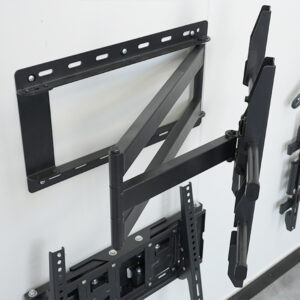
Full-Motion Mount: Load Extended Away from the Wall
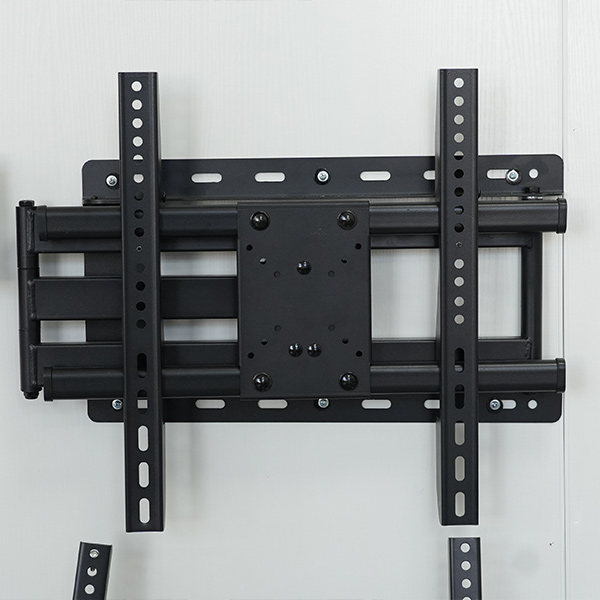
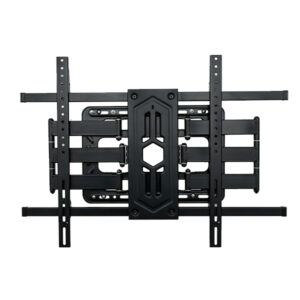
A full-motion bracket moves the display away from the mounting surface.
As the screen extends outward, the distance between the display load and the wall increases.
That distance creates leverage.
This is one reason TV wall mount weight capacity deserves closer examination on articulating products.
Recent user discussions about large-screen full-motion installations continue to focus on this exact issue: even when television weight is below the printed limit, users question screen-size limits, anchor behavior, and the additional force created when an arm extends away from the wall.
For applications requiring changing viewing directions, buyers can review Xinge Mount's full-motion TV wall mount and compare its structure with fixed and tilting options.
The Hidden Factor: Leverage
Weight tells you how strongly gravity pulls downward.
But with an articulating bracket, engineers and installers also care about the distance between the load and its supporting point.
A simple way to understand this is to imagine holding a heavy object.
Holding it close to your chest feels easier.
Holding the same object straight out in front of you feels much harder.
The object has not become heavier. The distance has increased the turning effect on your arms.
A similar principle affects an extended TV wall mount.
What Changes When the Arm Extends?
When a display moves farther from the wall:
- More turning force can act on the wall plate.
- Arm joints carry greater mechanical demand.
- Fasteners can experience greater pull-out forces.
- Small amounts of structural flex become more visible.
- Screen sag or leveling problems may become easier to notice.
- Weak joints or poor installation can become more critical.
Therefore, a professional assessment of TV wall mount weight capacity should ask:
Where is the display when the system is carrying the most demanding load?
Testing only how a bracket feels when folded flat against the wall does not provide the same practical information as evaluating stability when fully extended.
Extension Distance Matters in B2B Product Comparison
When comparing two full-motion brackets, do not evaluate load rating without also looking at arm extension.
Even when two products advertise the same TV wall mount weight capacity, they may be intended for different installation conditions.
That is why a serious B2B specification sheet should show more than a single maximum-load figure.
TV Wall Mount Weight Capacity by Mount Type
Different bracket structures create different mechanical demands.
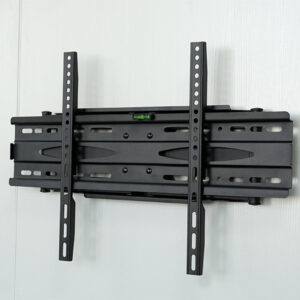
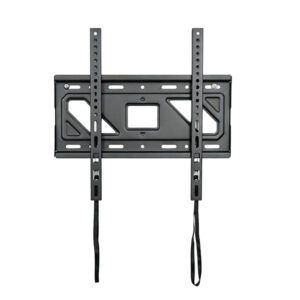
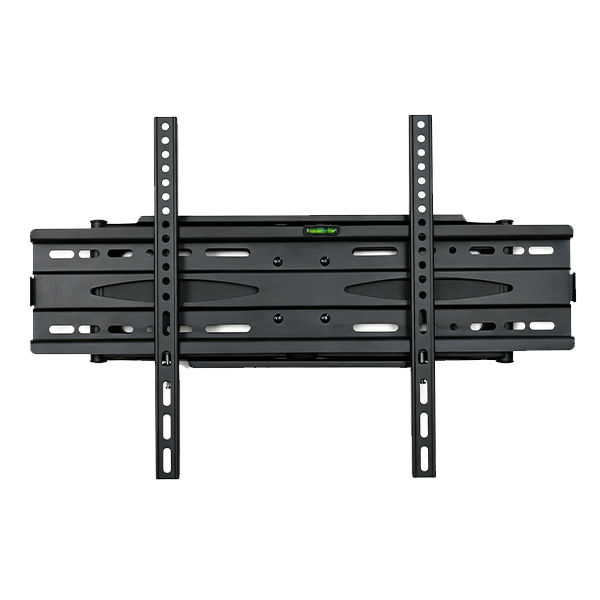
Fixed TV Wall Mount
A fixed bracket usually contains:
- Wall plate
- Vertical TV rails
- Locking system
- Mounting hardware
Because the screen remains close to the wall, it is often selected for hotels, apartments, bedrooms, offices, classrooms, and commercial displays where the viewing direction is fixed.
When evaluating TV wall mount weight capacity for a fixed bracket, check:
- Steel thickness
- Rail engagement
- Wall plate width
- Locking mechanism
- Mounting points
- Welds or formed connections
- VESA compatibility
- Installation hardware
Tilting TV Wall Mount
A tilting bracket introduces moving or adjustable components.
The structure must maintain the selected screen angle while carrying the television.
A tilting TV wall mount is useful for higher installations, glare control, and applications requiring vertical adjustment without full horizontal movement.
In addition to TV wall mount weight capacity, buyers should evaluate:
- Tilt-lock mechanism
- Friction adjustment
- Pivot hardware
- Rail stability
- Screen leveling
- Clearance behind the display
Full-Motion TV Wall Mount
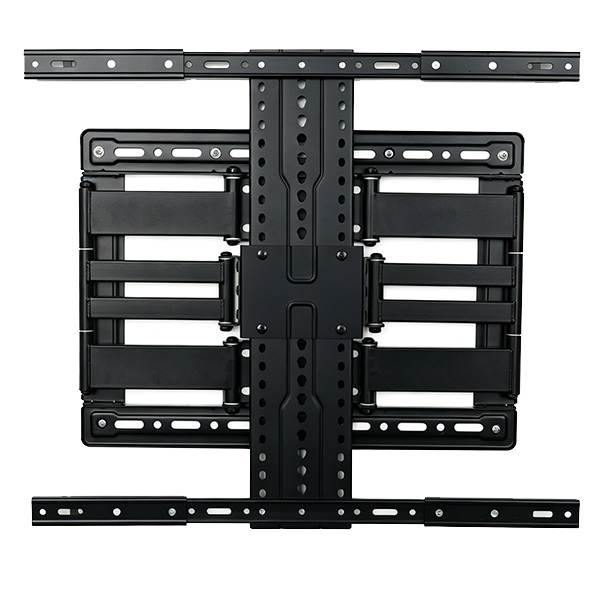
Full-motion products require the most detailed evaluation because they can combine:
- Extension
- Retraction
- Swivel
- Tilt
- Leveling
- Multiple rotating joints
The printed TV wall mount weight capacity is important, but so are arm geometry, wall plate design, joint construction, steel forming, welding, fasteners, and repeated adjustment performance.
Xinge Mount's existing guide on full motion TV mounts vs fixed and tilting mounts explains how the different structures fit different viewing environments.
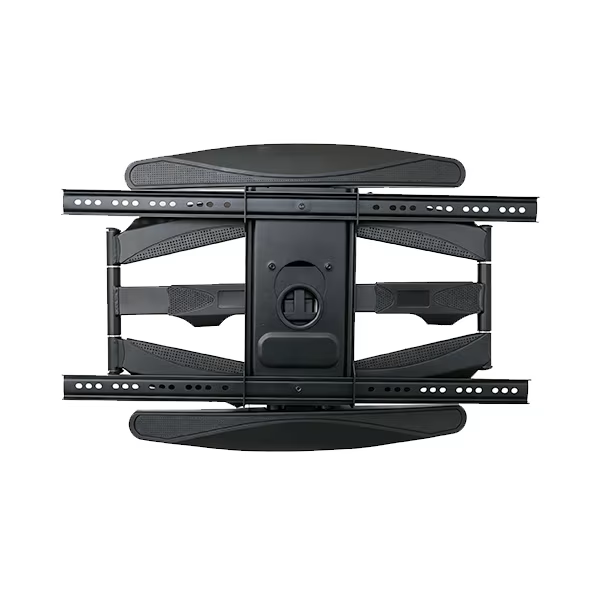
Retractable and Long-Arm Mounts
The longer the arm, the more important structural evaluation becomes.
For a retractable TV wall mount, buyers should pay particular attention to:
- Maximum extension
- Wall plate size
- Joint diameter
- Arm profile
- Welding quality
- Screen sag at full extension
- Rotation resistance
- Repeated movement testing
The Wall Can Become the Real Weight Limit
A mount can only transfer its load into whatever supports it.
This means the effective installation capacity is not automatically equal to the bracket's laboratory or manufacturer rating.
A wall may be:
- Concrete
- Solid brick
- Hollow brick
- Concrete block
- Timber framing
- Metal stud framing
- Drywall over wood studs
- Drywall over metal studs
- Plaster over masonry
- Composite wall construction
Each structure behaves differently.
Concrete and Solid Masonry
Solid structural materials can provide strong mounting conditions when appropriate anchors, hole dimensions, installation methods, and edge distances are used.
However, not all masonry is equivalent.
Weak, cracked, deteriorated, hollow, or non-structural material may require a different solution.
Wood Stud Walls
When installing into wood framing, the bracket must be positioned so that appropriate fasteners engage suitable structural members according to the installation instructions.
Stud spacing also affects wall plate design.
A wider wall plate can provide more installation flexibility for certain framing configurations.
Drywall Is Not Automatically Structural Support
Drywall is primarily a finishing material.
Some specialized anchoring systems are designed for defined loads and wall assemblies, but buyers should never assume that ordinary drywall alone can support the full published TV wall mount weight capacity of a bracket.
The installation should follow the mounting-product instructions and requirements of the selected fixing system.
Wall Condition Matters
Even the correct material type does not guarantee a strong installation.
Inspect for:
- Cracks
- Water damage
- Crumbling material
- Loose plaster
- Deteriorated masonry
- Damaged studs
- Previous oversized holes
- Unverified wall repairs
A strong TV bracket installed into a weak substrate is still a weak mounting system.
Fasteners and Anchors Are Part of TV Wall Mount Weight Capacity
Mounting hardware is often treated as an accessory.
Structurally, it is part of the load path.
Fasteners connect the wall plate to the building, while another set of screws connects the display to the TV rails or mounting plate.
Failures at either connection can compromise the entire system.
Historical product-safety recalls illustrate why this matters. The U.S. Consumer Product Safety Commission has documented television-mount recalls involving problems such as weld failure, arm-joint issues, cracking components, and connections that could allow a display to detach or fall.
Wall Fasteners
Wall-side hardware should be selected for the specific supporting material.
Important variables include:
- Fastener diameter
- Fastener length
- Embedment depth
- Anchor type
- Hole diameter
- Wall material
- Edge distance
- Fastener spacing
- Installation torque
- Condition of the substrate
Do not replace specified fasteners casually.
A larger screw is not automatically safer if it is incompatible with the wall, wall plate, or anchor system.
TV-Side Screws
The display connection has its own requirements.
Check:
- Thread diameter
- Thread pitch
- Required insertion depth
- Washer requirements
- Spacer requirements
- Recessed mounting holes
- Rear-cover geometry
The correct TV wall mount weight capacity means little if the television itself is attached using unsuitable screws.
Why Bigger TVs Need More Than a Weight Check
Modern displays create an interesting purchasing problem.
A new large-screen TV may weigh less than an older, smaller display.
This can tempt buyers to ignore the screen-size limit printed on a bracket and focus only on weight.
That is not always appropriate.
Screen size can affect:
Physical Clearance
A wider television may hit the wall before the bracket reaches its advertised swivel angle.
Mount Visibility
A wall plate or long arm may become visible around the edges of a smaller or differently shaped screen.
Center of Gravity
The display geometry determines where its mass sits relative to the mounting interface.
User Handling
Larger displays create more leverage when a user pushes or pulls from the screen edge.
VESA Position
Mounting holes may sit high, low, or off-center on the rear housing.
Cable Movement
Large full-motion displays need enough cable length and clearance throughout the arm's range of motion.
Therefore, B2B buyers should treat TV wall mount weight capacity, recommended display size, and VESA range as three separate specifications.
All three must be compatible.
How Mount Testing Should Influence Purchasing Decisions
For distributors, private-label companies, and project suppliers, a product's load claim should be supported by a clear testing process.
A buyer does not necessarily need every engineering detail, but should understand how the supplier verifies structural performance.
Relevant Safety Frameworks
UL Solutions identifies UL 2442 as the dedicated standard for wall- and ceiling-mounted systems and accessories used with audiovisual equipment. UL furniture and mounting safety information lists UL 2442 among applicable standards for wall- and ceiling-mount accessories.
ANSI's standards information likewise identifies UL 2442 as the standard for wall- and ceiling-mounts and accessories. ANSI information for UL 2442
UL's engineering guidance also notes that generic mounting systems intended for standardized display attachment have their own dedicated mounting standard rather than relying only on requirements for the display itself.
This does not mean every product on the market has a particular certification. Buyers should request documentation relevant to the specific product, target market, and sales claim.
What Buyers Should Ask About Load Testing
When TV wall mount weight capacity is a critical purchasing specification, ask the supplier:
- What load was applied?
- How long was the load maintained?
- Was the mount folded or extended?
- Were multiple arm positions evaluated?
- Was permanent deformation observed?
- Were welds inspected afterward?
- Were joints checked for loosening?
- Was repeated movement tested?
- What wall structure was simulated?
- Which fasteners were used?
- Is the stated rating based on internal testing or third-party evaluation?
- Can testing reports or quality records be provided where applicable?
A statement such as “heavy duty” is marketing language.
A measurable load rating supported by clear test conditions is engineering information.
Static Load Is Only One Part of Real-World Performance
A television hanging motionless is not always the most demanding condition a mount experiences.
In real use, adjustable brackets may be:
- Extended
- Retracted
- Swiveled
- Tilted
- Pulled from one corner of the screen
- Adjusted repeatedly
- Accidentally moved quickly
- Used with attached devices or cables
This introduces movement and repeated loading.
Joint Wear
A full-motion bracket may feel solid when new but gradually develop movement if joints, bushings, fasteners, or friction components are poorly designed.
Screen Sag
Sag occurs when the television no longer stays level or gradually rotates downward.
Potential causes include:
- Joint clearance
- Arm flex
- Insufficient friction
- Uneven assembly
- Loose hardware
- Excessive load
- Structural deformation
Repeated Adjustment
Commercial installations can experience more movement than residential installations.
Hotel staff, teachers, office teams, retail employees, and exhibition personnel may reposition a display regularly.
For these applications, TV wall mount weight capacity should be evaluated together with durability and repeated-motion performance.
A Better Way to Compare Two TV Wall Mounts
Do not compare products using maximum load alone.
Use a structured comparison.
| Evaluation Item | Why It Matters |
| TV Wall Mount Weight Capacity | Establishes the stated maximum display load |
| Recommended Screen Size | Helps evaluate overall display geometry |
| VESA Range | Determines mounting-hole compatibility |
| Maximum Extension | Influences leverage and room positioning |
| Wall Plate Width | Affects structural attachment options |
| Arm Structure | Influences stiffness and movement |
| Number of Joints | Affects flexibility and mechanical complexity |
| Material Thickness | One indicator of structural construction |
| Welding/Connection Design | Important for load transfer |
| Fastener System | Connects the bracket to the supporting wall |
| Tilt/Swivel Mechanism | Must remain stable under load |
| Test Documentation | Supports performance claims |
| Installation Instructions | Reduces misuse and installation error |
| Packaging Protection | Helps prevent transport deformation |
A good purchasing decision looks at the whole table rather than selecting whichever mount displays the largest capacity number.
Common Weight-Capacity Mistakes B2B Buyers Should Avoid
Mistake 1: Choosing the Highest Number for Marketing
A larger TV wall mount weight capacity can sound attractive on a product listing.
But an unsupported or poorly explained claim can create greater risk.
Product specifications should be accurate, reproducible, and consistent across:
- Website
- Catalog
- Packaging
- Manual
- Technical sheet
- Sales quotation
Mistake 2: Assuming Thicker Steel Solves Everything
Material thickness is important, but it is only one variable.
A bracket also depends on:
- Geometry
- Bends
- Ribbing
- Weld position
- Joint structure
- Fasteners
- Wall plate
- Material grade
- Manufacturing consistency
Two products with similar steel thickness can perform differently.
Mistake 3: Ignoring Full Extension
A full-motion mount should not be judged only while folded against the wall.
Ask how it behaves when the screen is extended and rotated.
Mistake 4: Treating Every Wall as Equal
Installation hardware suitable for one substrate may not be appropriate for another.
Product manuals should clearly explain supported installation conditions and limitations.
Mistake 5: Confusing TV Weight with Shipping Weight
Use the actual relevant display weight from the manufacturer's technical specification.
Do not use:
- Carton weight
- Weight with packaging
- Weight of unrelated accessories
Mistake 6: Assuming a Safety Factor Allows Overloading
Never deliberately exceed the published TV wall mount weight capacity because you believe the manufacturer has built in additional margin.
The stated limit should remain the working boundary unless the manufacturer provides documented instructions stating otherwise.
Mistake 7: Ignoring Accessories
Some installations add equipment such as:
- Cameras
- Sound equipment
- Media players
- Adapter plates
- Specialized brackets
- Cable boxes
- Shelves
Their weight and mounting location may affect the total system.
How to Build a Better Load-Capacity Specification Sheet
A useful B2B specification should answer more than “How many kilograms?”
Consider including:
Basic Compatibility
- Recommended TV size
- VESA range
- Maximum TV wall mount weight capacity
- Mount type
Mechanical Specifications
- Material
- Material thickness
- Wall plate dimensions
- Arm length
- Maximum extension
- Minimum wall distance
- Swivel range
- Tilt range
- Post-installation leveling
Installation Information
- Compatible wall types
- Required fixing points
- Hardware kit
- TV mounting screws
- Spacers and washers
- Installation tools
- Warning labels
Testing Information
- Load-test procedure
- Test position
- Test duration
- Repeated-motion test where applicable
- Inspection criteria
- Quality-control checkpoints
Commercial Information
- Model number
- Package dimensions
- Carton quantity
- Manual languages
- Barcode options
- Logo customization
- Private-label packaging
- OEM/ODM options
Clear technical data helps distributors compare models and helps downstream customers understand what they are buying.
Xinge Mount's complete TV Mounts & Brackets range covers fixed, tilting, swivel, retractable, full-motion, and mobile display mounting options for different installation needs.
Questions to Put in a TV Mount RFQ
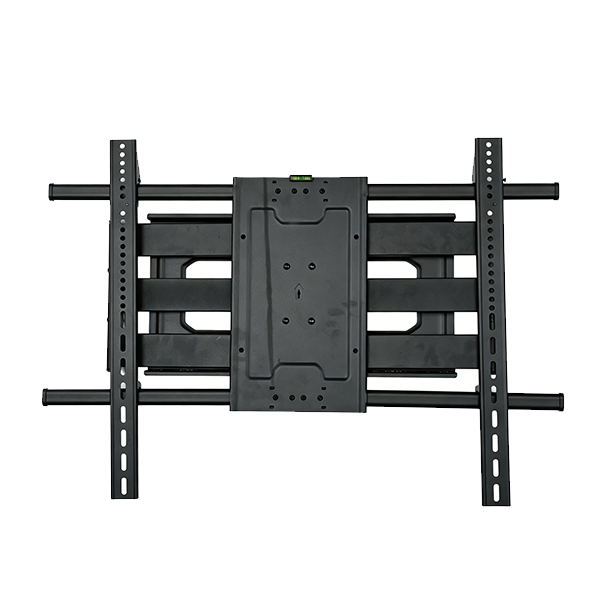
For bulk purchasing, send more than the requested quantity.
A detailed RFQ produces a more accurate recommendation.
Ask or provide:
- What television-size range will the product support?
- What VESA patterns are required?
- What minimum TV wall mount weight capacity is needed?
- Is the mount fixed, tilting, swivel, or full motion?
- What maximum extension is required?
- Which wall types are common in the target market?
- What hardware kit should be included?
- Are specific load tests required?
- Are third-party standards or certifications required for the market?
- How frequently will the display be adjusted?
- Is private-label packaging required?
- What manual languages are needed?
- Are warning labels or installation diagrams required?
- Does the project need custom structure, color, logo, or packaging?
For project matching, private-label requirements, or customized bracket specifications, buyers can send these details through the Xinge Mount Contact Us page.
Frequently Asked Questions
How Much Weight Can a TV Wall Mount Hold?
It depends on the specific model.
Always use the published TV wall mount weight capacity for that exact bracket and verify that the television weight, screen dimensions, VESA pattern, wall structure, and installation method all comply with the product requirements.
Do not estimate capacity from appearance alone.
Is It Safe to Mount a TV That Is Exactly at the Weight Limit?
The display should not exceed the manufacturer's stated maximum load.
For a real project, also evaluate wall construction, hardware, VESA compatibility, screen geometry, and installation instructions rather than treating the maximum-load number as the only criterion.
Can a Mount Hold a Larger TV If the TV Is Lightweight?
Possibly, but weight is only one specification.
The larger display must also fall within the mount's intended screen range, fit the VESA interface, clear the wall during movement, and remain compatible with the manufacturer's installation requirements.
Does a Full-Motion Mount Need a Higher Weight Capacity?
Not automatically.
However, because a full-motion bracket extends the television away from the wall, leverage and joint stability become especially important.
The appropriate TV wall mount weight capacity should therefore be evaluated alongside extension distance and structural design.
Is a Fixed TV Mount Stronger Than a Full-Motion Mount?
Mount type alone does not determine strength.
A properly engineered full-motion bracket can support substantial loads, while a poorly designed fixed bracket may have a much lower rating.
Compare the actual specifications and testing of each product.
Does VESA Size Affect Weight Capacity?
VESA size and weight rating are different specifications.
The VESA pattern determines whether the mounting holes align. The load rating determines the stated structural capacity of the mount.
Both must be compatible.
Can I Exceed the TV Wall Mount Weight Capacity by a Small Amount?
No intentional overload should be assumed safe.
Use the manufacturer's published rating as the maximum limit unless documented instructions specifically state otherwise.
Historical safety recalls involving mount components demonstrate why connection integrity and structural ratings should be taken seriously.
Does the Wall Affect How Much Weight the TV Mount Can Hold?
Yes.
The bracket transfers its load into the building structure through mounting fasteners.
Concrete, masonry, wood studs, metal framing, drywall assemblies, and other walls require different installation methods.
Why Does My Full-Motion TV Mount Sag?
Possible causes include joint clearance, loose fasteners, insufficient friction, excessive load, arm flex, installation error, or structural deformation.
Remove the load and inspect the installation if unusual movement appears. Follow the manufacturer's troubleshooting and installation instructions.
What Should Wholesale Buyers Ask a TV Mount Supplier?
Ask for:
- Maximum load rating
- Test conditions
- VESA range
- Recommended screen size
- Maximum extension
- Material specification
- Wall plate dimensions
- Hardware configuration
- Installation instructions
- Packaging details
- Quality-control information
- Relevant testing or compliance documentation
Conclusion
TV wall mount weight capacity looks like a simple specification, but the number only makes sense when the complete mounting system is considered.
The television load passes through mounting screws, rails, arms, joints, the wall plate, fasteners, and finally into the building structure. A weakness anywhere along that path can affect performance.
For fixed mounts, keeping the display close to the wall creates relatively straightforward geometry. Tilting mounts add adjustable pivots. Full-motion and retractable brackets introduce longer arms, multiple joints, and greater leverage when the screen extends into the room.