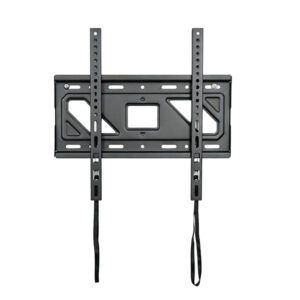
TV Wall Mount for Drywall: Studs, Anchors & Safe Setup
/
TV Wall Mount for Drywall: Studs, Anchors & Safe Setup
Share Box
Choosing a TV wall mount for drywall is not simply a matter of finding a bracket that fits the television. The visible drywall panel is only one part of the wall assembly. Behind it may be wood studs, metal framing, masonry, service cavities, wiring, plumbing, insulation, or other structural elements that determine how the mounting load should actually be supported.
That distinction becomes increasingly important with large televisions and full-motion brackets. A fixed mount keeps the screen close to the wall, while an articulating arm can extend the display outward and increase the mechanical demand on the attachment points.
For homeowners, installers, contractors, distributors, and B2B buyers, the right question is therefore not:
“Can a TV be mounted on drywall?”
The better question is:
“What structure is behind the drywall, and which mounting system is designed for that wall?”
This guide explains how to choose a TV wall mount for drywall, how wood studs and metal studs change installation requirements, when anchors may be appropriate, how fixed and full-motion mounts differ, and what wholesale buyers should check before approving a mounting product for a market or project.
Why Drywall Changes the Way You Choose a TV Mount
Drywall is widely used as an interior wall finish because it creates a smooth surface quickly and efficiently. However, a finished wall does not reveal what is behind the board.
A TV wall mount for drywall may ultimately transfer its load into:
- Wood framing
- Metal studs
- Concrete behind a lining system
- Masonry
- Purpose-built reinforcement
- Specialty wall anchors
- A combination of these structures
This is why two rooms that look identical can require completely different installation methods.
Independent TV wall-mounting guidance recommends securing conventional mounts into wall studs for a strong installation and notes that concrete, brick, and plaster walls may require different hardware or installation methods.
Drywall Is the Surface, Not Always the Support
The most important concept is to separate the visible wall finish from the load-bearing structure.
When a bracket is attached to wood studs, the screws pass through the drywall and engage the structural framing behind it.
The drywall creates spacing between the wall plate and stud, but the structural attachment comes primarily from the framing.
For this reason, a professional TV wall mount for drywall specification should explain not only that the bracket is “drywall compatible,” but also which structural conditions and fixing methods are approved.
What Is Behind a Typical Drywall Wall?
Before choosing hardware, identify the wall assembly.
Wood Stud Framing
Wood studs are common in residential construction in several markets.
Drywall panels are fastened over vertical framing members, creating a hollow cavity between the finished surfaces.
When the TV mount manufacturer specifies attachment to wood studs, lag screws or another approved fastening method are used to transfer the load into the framing.
This is one of the most common installation conditions for a TV wall mount for drywall.
Metal Stud Framing
Commercial offices, hotels, apartments, educational buildings, and other projects may use light-gauge metal framing.
Metal studs behave differently from wood.
A wood screw that performs well in timber should not automatically be assumed suitable for thin sheet-metal framing.
The installation may require:
- Appropriate toggle systems
- Specialty metal-stud fasteners
- Reinforcement
- Backing plates
- Different wall plate positioning
- A project-specific engineering solution
A TV bracket sold into commercial markets should therefore avoid describing all stud walls as though they are identical.
Reinforced Drywall Walls
Some projects install wood blocking, plywood backing, steel reinforcement, or other support behind the board specifically for wall-mounted equipment.
This can provide a broader and more predictable attachment area.
Hotels, offices, meeting rooms, classrooms, hospitals, retail displays, and commercial AV projects may plan reinforcement during construction before the drywall is closed.
For project installations, this is often easier than trying to solve every mounting condition after the wall is finished.
Drywall Over Masonry
Some walls use drywall as a finish over concrete or masonry rather than conventional framed cavities.
The installer may need to pass through the surface layer and secure the mount into the structural wall behind it.
In this situation, the correct TV wall mount for drywall installation can differ significantly from a conventional stud-wall installation.
TV Wall Mount for Drywall vs Concrete: What Changes?
Drywall and concrete require different thinking.
| Installation Factor | Drywall with Studs | Concrete Wall |
|---|---|---|
| Primary Support | Structural framing | Concrete substrate |
| Common Location Method | Stud finder / construction information | Direct wall positioning |
| Typical Fastening Principle | Fastener into framing | Suitable masonry anchor |
| Pilot Hole | Usually required | Usually required |
| Main Risk | Missing stud or weak attachment | Incorrect anchor or drilling |
| Mount Position Flexibility | Influenced by stud location | Often more flexible |
| Full-Motion Mount | Requires strong structural attachment | Requires suitable masonry attachment |
| Installer Focus | Stud position and wall assembly | Concrete condition and anchor system |
Neither wall type is automatically “better.”
A properly designed installation can perform well on either structure.
The important point is that the hardware and installation method must match the wall.
Why “Universal Hardware” Needs Careful Interpretation
Many TV brackets include several screws, washers, spacers, and anchors in one package.
This does not necessarily mean every supplied fastener can be used on every wall.
A good instruction manual should clearly identify:
- Which hardware is for the TV
- Which hardware is for wood framing
- Which hardware is for masonry
- Which installation conditions need additional hardware
- Which walls are not covered by the standard installation instructions
For distributors, clear labeling can significantly reduce installation mistakes.
Can You Install a TV Wall Mount for Drywall Without Studs?
This is one of the most common questions surrounding TV mounting.
The answer depends on the mount, television, anchor system, wall assembly, and manufacturer's instructions.
Some specialized mounting systems are specifically engineered for installation without conventional stud attachment. However, buyers should never assume that an ordinary wall mount can be converted into a drywall-only mount simply by adding generic anchors.
Do Not Substitute Anchors Without Verification
If a TV wall mount for drywall is designed to attach to wood studs, changing the fastener system changes the installation.
Before using a different anchor, verify:
- Anchor load rating
- Drywall thickness
- Wall condition
- Mount wall-plate design
- Number of attachment points
- TV weight
- Mount weight
- Extension distance
- Dynamic movement
- Manufacturer requirements
A fastener may have a high advertised load rating under one test condition but behave differently when used with a moving TV bracket.
Why Full-Motion Mounts Require More Caution
A fixed mount mainly carries the display close to the wall.
A full-motion mount can pull the display significantly farther away.
That creates leverage.
The same television therefore places different mechanical demands on a wall when installed on a long articulating arm.
For a TV wall mount for drywall with extension capability, attachment quality becomes especially important.
When the screen is repeatedly pulled, pushed, and rotated, the wall connection experiences forces that are different from a permanently fixed display.
When Professional Assessment Makes Sense
Professional installation is particularly useful when:
- Stud locations cannot be confirmed.
- The wall contains metal framing.
- The wall condition is uncertain.
- A large display is being installed.
- The mount has a long extension arm.
- The installation is above a fireplace.
- The building uses unusual wall construction.
- The mounting location contains plumbing or electrical services.
- The installation is part of a public or commercial project.
The goal should always be to understand the wall—not to find an anchor that allows the wall structure to be ignored.
Fixed, Tilting, or Full-Motion: Which Mount Works Best on Drywall?
Mount style affects both viewing flexibility and structural demand.
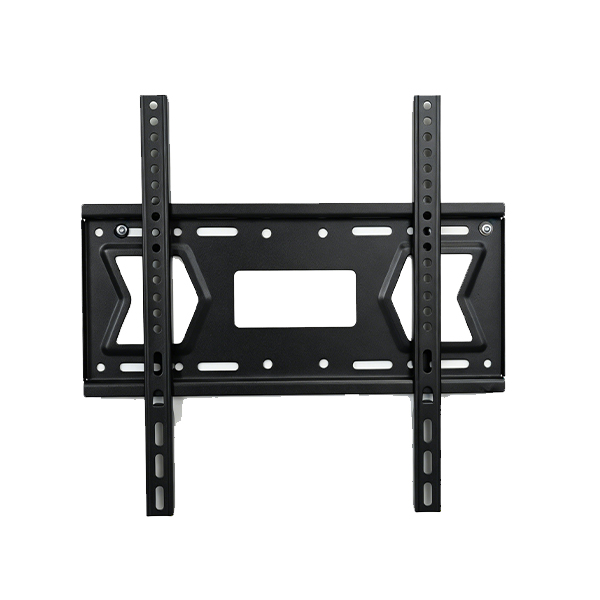
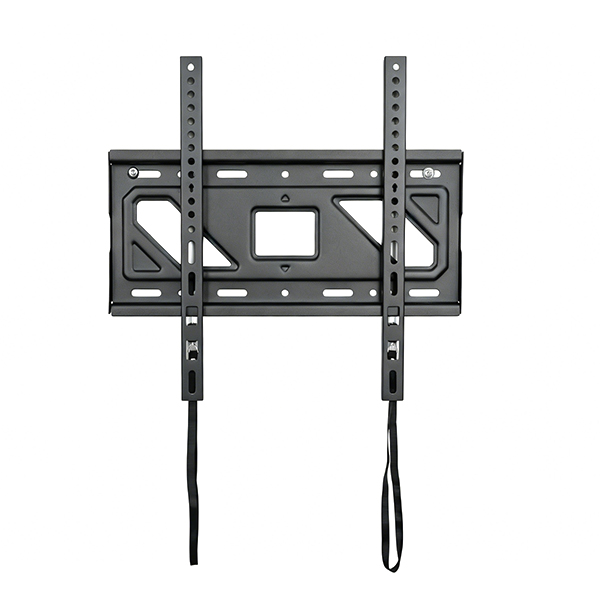
Fixed TV Wall Mount
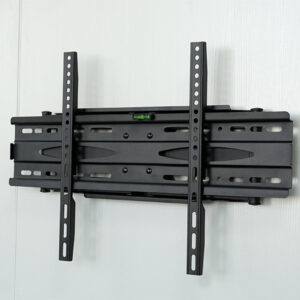
A fixed TV wall mount is the simplest structure.
The display remains close to the wall and normally does not require frequent movement.
Advantages include:
- Low-profile appearance
- Simple structure
- Fewer moving joints
- Predictable viewing position
- Suitable for permanent installations
- Good fit for hotels, bedrooms, apartments, offices, and classrooms
When selecting a TV wall mount for drywall, a fixed design can be an efficient solution where the viewing angle does not need to change.
However, the wall attachment must still match the required structural conditions.
Tilting TV Wall Mount
A tilting TV wall mount allows vertical screen-angle adjustment.
This can be useful when:
- The television is mounted higher than seated eye level.
- Overhead lighting causes glare.
- A hotel or commercial project requires a standard higher installation height.
- Rear cable access needs slightly more flexibility.
The tilt mechanism adds moving components, so buyers should evaluate both wall attachment and pivot stability.
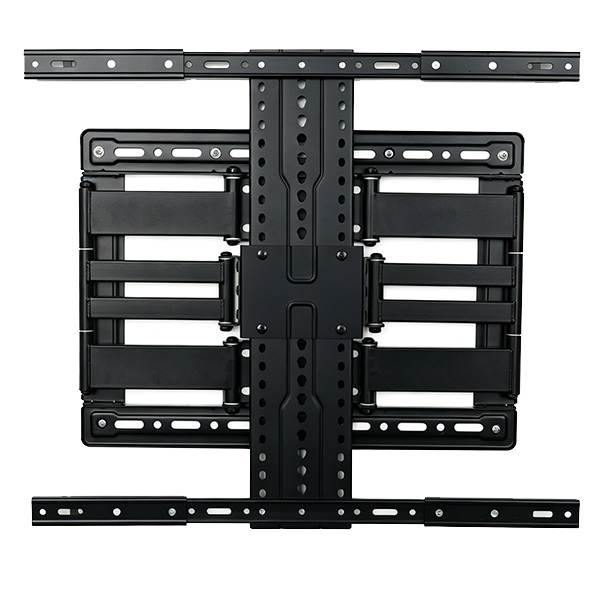
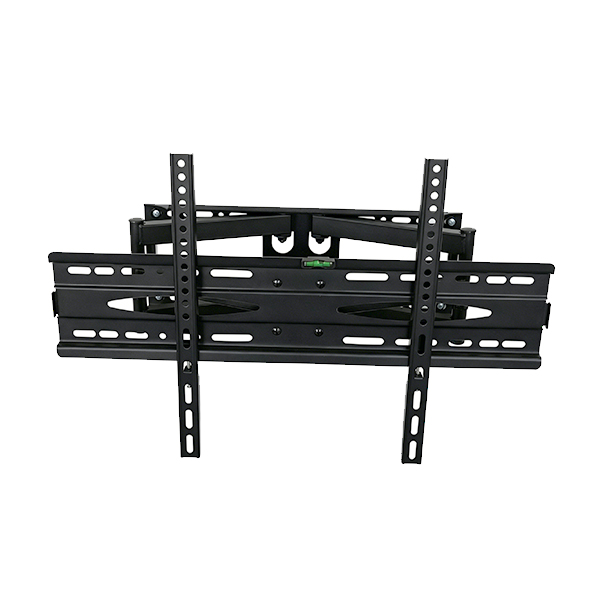
Full-Motion TV Wall Mount
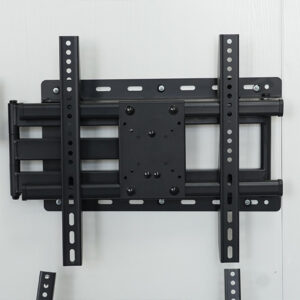
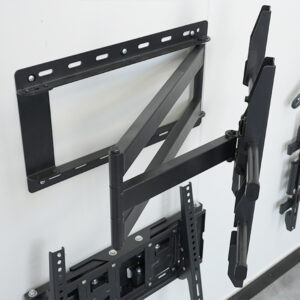
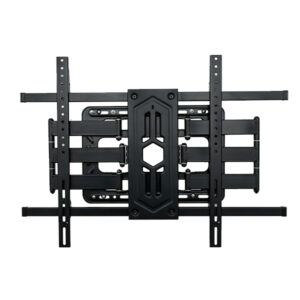
A full-motion TV wall mount allows the television to extend and swivel.
This is useful in:
- Corner installations
- Open-plan rooms
- Meeting spaces
- Multi-position viewing areas
- Bedrooms
- Commercial display environments
The greater flexibility also creates more demanding structural conditions.
When using a full-motion TV wall mount for drywall, consider:
- Arm extension
- Screen width
- TV weight
- Wall plate size
- Number of studs used
- Wall fasteners
- Joint stability
- Repeated adjustment
- Cable movement
The existing full-motion vs fixed and tilting TV mount guide can help buyers compare these structures in more detail.
How TV Weight Changes Drywall Mounting Requirements
TV weight is one of the first specifications buyers should confirm.
However, it should not be considered independently.
A complete installation assessment includes:
Display weight + mount design + wall structure + hardware + installation geometry
TV Weight vs Mount Rating
The television should remain within the specified load rating of the mount.
Do not intentionally exceed the manufacturer's stated capacity because a bracket appears strong.
The previous TV wall mount weight capacity guide explains why load ratings, extension distance, wall support, and hardware must be considered together.
Why Extension Distance Matters
Imagine holding a weight close to your body and then holding the same weight at arm's length.
The weight is unchanged, but holding it farther away creates more leverage.
A similar principle applies to an articulating TV wall mount for drywall.
When the television moves farther away from the wall:
- The wall plate experiences greater turning force.
- Fasteners may experience increased pull-out demand.
- Arm flex becomes more visible.
- Joint play becomes more noticeable.
- Wall movement may become easier to detect.
This is why a full-motion mount should not be evaluated only in its folded position.
Large Screen Does Not Always Mean Heavy Screen
Modern televisions can be relatively light compared with older displays.
However, physical screen dimensions still matter.
A larger screen can:
- Create greater leverage when manually adjusted.
- Require more side clearance.
- Reduce maximum swivel angle.
- Place the VESA pattern farther from the screen center.
- Require a wider mounting plate.
Always check screen size, TV weight, and VESA pattern separately.
The official VESA mounting standard provides the industry framework for standardized flat-display mounting interfaces.
How to Find Wall Studs Before Installation
Finding the structural framing is one of the most important steps when installing a conventional TV wall mount for drywall.
Use a Stud Finder
An electronic or magnetic stud finder can help identify framing locations behind the finished wall.
Do not rely only on one quick scan.
Instead:
- Scan from both directions.
- Identify both edges of the suspected stud.
- Mark the center.
- Repeat the scan at different heights.
- Compare the result with nearby wall features.
- Confirm the structure before drilling.
Do Not Assume Every Stud Is in the Expected Position
Standard framing layouts can provide useful clues, but real buildings may contain:
- Additional framing
- Doors and windows
- Plumbing chases
- Electrical boxes
- Structural posts
- Previous renovations
- Fire blocking
- Uneven stud spacing
Treat expected spacing as a clue, not proof.
Be Aware of Electrical and Plumbing Services
Before drilling, consider what may be inside the wall.
Electrical wiring and pipes may run through framing cavities or through drilled holes in studs.
A professional installation process should account for hidden services rather than simply drilling wherever a stud finder detects density.
Choosing Fasteners and Anchors for a TV Wall Mount for Drywall
The correct fastener depends on the supporting material.
There is no single screw or anchor that is automatically ideal for every drywall installation.
Wood Stud Installation
For wood framing, the bracket manufacturer's specified fasteners typically pass through the wallboard and engage the stud.
Important factors include:
- Pilot-hole diameter
- Screw diameter
- Screw length
- Thread engagement
- Washer use
- Stud location
- Number of attachment points
- Tightening method
Over-tightening can damage components or crush the wall surface. Under-tightening can allow movement.
Follow the product instructions.
Metal Stud Installation
Metal framing requires a fastening system suitable for thin steel construction.
Possible solutions depend on the project and may involve:
- Rated toggle anchors
- Specialty metal-stud fasteners
- Reinforcement
- Backing boards
- Multiple attachment points
Never assume wood-stud instructions apply unchanged to metal studs.
Drywall Anchors
When a mounting system is specifically designed for drywall-only installation, use only the anchor type and wall conditions specified for that system.
Do not mix hardware based solely on individual anchor load claims.
A complete TV wall mount for drywall must be evaluated as an assembled system.
Masonry Behind Drywall
Where drywall covers concrete or masonry, installers may require longer hardware or another approved mounting approach to reach the structural substrate.
Wall thickness, cavity depth, anchor embedment, and mount geometry all matter.
A Pre-Installation Checklist for Drywall TV Mounting
Before drilling any holes, review the following checklist.
Television Information
Confirm:
- TV model
- Screen size
- Display weight
- VESA pattern
- Mounting screw specification
- Rear-port location
- Power-cable direction
- Required spacers
Mount Information
Confirm:
- Supported TV size
- Load capacity
- VESA range
- Fixed, tilting, or full-motion structure
- Maximum extension
- Wall plate dimensions
- Required mounting points
- Included hardware
- Installation instructions
Wall Information
Confirm:
- Drywall thickness where relevant
- Wood or metal framing
- Stud locations
- Structural reinforcement
- Wall condition
- Hidden services
- Required anchor system
Room Information
Confirm:
- Viewing distance
- Mounting height
- Available swivel clearance
- Furniture position
- Cable routing
- Electrical outlet position
- Door clearance
- Window location
A good TV wall mount for drywall installation starts with planning rather than drilling.
Drywall Installation Mistakes That Cause Problems
Mounting Only to the Visible Surface Without Checking the Wall
The surface may look solid while providing little structural information.
Always identify the wall assembly.
Using the Wrong Anchor
Different anchors are designed for different materials and installation conditions.
Do not choose an anchor only because the package displays a large load number.
Missing the Center of a Wood Stud
A fastener positioned near the edge of a stud may have less reliable engagement than one properly centered.
Confirm stud boundaries before drilling.
Assuming Metal Studs Behave Like Wood
Metal framing requires different fastening considerations.
This is especially important in commercial buildings.
Ignoring Full-Motion Leverage
A full-motion TV wall mount for drywall should be evaluated in its extended position, not only when folded flat.
Overlooking TV Ports
A wall plate or vertical mounting rail can block:
- HDMI ports
- Power connections
- Network connections
- Antenna inputs
- USB ports
- Service ports
Check the television rear layout before final installation.
Installing the Mount Before Checking VESA Position
The VESA holes may not be centered on the back of the television.
This can cause the final screen height to differ from the expected position.
Using the Wrong TV Screws
Mounting screws that are too short may not engage enough thread.
Screws that are too long can bottom out or potentially damage the display.
Use the television manufacturer's specified thread and insertion depth.
Forgetting Cable Movement
Full-motion mounts need enough cable length to extend, swivel, and retract without pulling connections.
What B2B Buyers Should Ask a TV Mount Manufacturer
For wholesale and project purchasing, wall compatibility should be part of the technical specification—not an afterthought.
Before ordering a TV wall mount for drywall, ask:
- Is the product intended for wood-stud installation?
- Can it be used with metal-stud walls?
- Is drywall-only mounting approved?
- What wall hardware is included?
- Which fasteners correspond to each wall type?
- What TV weight range is supported?
- What VESA patterns are supported?
- What is the maximum extension?
- How wide is the wall plate?
- What stud spacing can the wall plate accommodate?
- Are alternative wall plates available?
- What load tests are performed?
- Is the mount tested while fully extended?
- Are installation diagrams available?
- Can hardware labels be customized?
- Can manuals be supplied in multiple languages?
- Can wall-type warnings be printed on packaging?
- Can OEM packaging explain wood, concrete, and metal-stud installation separately?
Buyers can review the complete TV Mounts & Brackets collection when comparing suitable bracket structures.
For project specifications or custom hardware configurations, requirements can be submitted through the Contact Us page.
How Better Packaging Can Reduce Drywall Installation Errors
Packaging is particularly important for mass-market and private-label products because the installer may never speak directly with the factory.
A carton should communicate critical compatibility information quickly.
Useful information includes:
- Supported TV size
- VESA range
- Maximum load
- Mount structure
- Recommended wall types
- Stud requirements
- Required mounting hardware
- Installation warnings
- QR code for updated instructions
- Model number
- Hardware identification
Separate Hardware by Purpose
One common source of confusion is a mixed hardware bag.
A better kit may organize components into labeled groups such as:
- TV mounting screws
- TV spacers and washers
- Wood-stud hardware
- Masonry hardware
If metal-stud or drywall-only hardware is not included or not approved, say so clearly.
Use Wall Diagrams
A simple diagram can show the difference between:
- Drywall over wood studs
- Drywall over metal studs
- Concrete
- Masonry
For B2B buyers, better instructions can reduce product returns, installation complaints, and unnecessary customer-support questions.
TV Wall Mount for Drywall Selection by Application
Different projects create different priorities.
| Application | Recommended Focus |
| Residential Living Room | Viewing position, stud location, cable routing |
| Bedroom | Slim profile, tilt option, mounting height |
| Hotel Room | Stable fixed installation, easy maintenance |
| Apartment Project | Standardized installation and clear hardware |
| Office Meeting Room | Screen alignment and cable management |
| Classroom | Strong structural attachment and repeated-use safety |
| Retail Display | Long operating hours and secure installation |
| Conference Room | Full-motion flexibility where required |
| Rental Property | Durable hardware and easy inspection |
For large projects, it is useful to determine expected wall construction before selecting the bracket.
One mount model may not be the best solution for every building type.
FAQ
Can I Install a TV Wall Mount for Drywall?
Yes, televisions are commonly mounted on drywall-finished walls, but the installation method depends on the structure behind the drywall.
Conventional mounts are often attached to wood studs or another structural support rather than relying only on the drywall panel.
Do I Need a Stud for a TV Wall Mount for Drywall?
Many conventional TV mounts are designed to attach to studs.
Some specialized products or anchor systems may support other installation methods, but they must be specifically designed and rated for the wall condition and load.
Follow the mounting-system instructions.
Can I Mount a TV Directly to Drywall Without Studs?
Only use a drywall-only method when the complete mount and anchor system is specifically approved for that installation.
Do not replace the manufacturer's structural mounting method with generic anchors simply because the television appears lightweight.
Are Drywall Anchors Safe for a TV?
Safety depends on the anchor type, wall thickness, wall condition, TV weight, bracket design, number of anchors, and whether the complete system is approved for that use.
Individual anchor ratings should not be considered independently from the mounting system.
Is a Fixed TV Mount Better for Drywall?
A fixed mount keeps the television closer to the wall and creates less leverage than a long full-motion arm.
However, both fixed and full-motion mounts still require proper structural attachment.
Can a Full-Motion TV Mount Be Installed on Drywall?
Yes, when the wall structure and attachment method meet the product's requirements.
Because full-motion mounts extend away from the wall, structural attachment and fastener selection are especially important.
How Do I Know Where the Stud Is?
A stud finder can help locate framing behind drywall.
Scan from multiple directions, identify both edges, mark the center, and confirm the wall structure before drilling.
What If My Wall Has Metal Studs?
Do not automatically use wood-stud hardware.
Metal framing may require specialty fasteners, toggle systems, reinforcement, or another approved mounting method.
Can I Use the Same Hardware for Drywall and Concrete?
Usually not.
Wood framing, metal framing, drywall-only systems, concrete, and masonry have different fastening requirements.
Follow the hardware instructions for the specific wall type.
How Much Weight Can a TV Wall Mount for Drywall Hold?
There is no universal drywall TV-mount capacity.
The allowable load depends on the bracket, structural support, fasteners, wall assembly, television, and installation method.
Always use the product's stated requirements and load limits.
Is VESA Compatibility Related to the Wall Type?
No.
VESA describes the mounting-hole interface between the television and bracket.
Wall compatibility describes the connection between the bracket and building structure.
Both must be checked separately.
Should Large TVs Be Installed by a Professional?
Professional installation is a sensible option when the television is large, the wall construction is uncertain, the bracket has a long articulating arm, hidden services are a concern, or the project involves public and commercial spaces.
Official TV safety guidance also emphasizes properly mounting flat-screen televisions and following manufacturer instructions.
Conclusion
Choosing a TV wall mount for drywall requires more than matching a television to a bracket.
The most important step is understanding what is behind the drywall.
A finished drywall wall may contain wood studs, metal framing, masonry, reinforcement, or another supporting structure. Each condition requires an appropriate fastening method.
For a reliable installation, evaluate:
- Wall construction
- Structural attachment
- TV weight
- Mount load capacity
- VESA compatibility
- Fastener type
- Stud position
- Mount structure
- Extension distance
- Cable clearance
- Manufacturer instructions
Fixed brackets are often a practical solution when the viewing position remains constant. Tilting brackets provide vertical adjustment, while full-motion mounts offer greater flexibility but place greater mechanical demand on the wall attachment when extended.
For distributors and project buyers, a high-quality TV wall mount for drywall should also come with clear technical documentation. Buyers should know which wall types are supported, which hardware should be used, how the mount was tested, and which installation methods are not recommended.
Clear specifications do more than help an installer complete the job. They reduce installation errors, prevent unnecessary product returns, improve customer confidence, and make a TV mounting product easier to distribute across different markets.
Explore the Xinge Mount TV Mounts & Brackets range for fixed, tilting, retractable, swivel, and full-motion mounting solutions, or contact Xinge Mount to discuss wall compatibility, product specifications, packaging, and OEM/ODM requirements.